Pages

Showing posts with label mining. Show all posts

Sunday, May 28, 2017

Space Islands from Space Waste

Eventually there will come a time when humans are able to fully access and exploit the infinite raw materials in space. But there will be material which is disposed of as asteroids are mined for precious and useful metals. The rock and dirt will simply be thrown away. But this may be one of the most valuable material.

Space is a different environment from any that we have ever experienced on earth. On earth certain things can be ignored or discarded and they will simply be reabsorbed by the world until a use is found for them. Living in space doesn't afford the luxury of waste. As new industries and products are created that use the resources of space they must take a comprehensive view of how to use those resources.

Space mining will be one of the first to experience the need for total resource utilization as it will be the one of the first product-based industries in space. (satellites are a service-based industry)

Not all of what is mined from asteroids will need to be dropped to earth to be used. As it stands now the only thing worth dropping are the precious metals. But some of the other useless minerals will likely be turned into spacecraft, and large asteroids may be hollowed out to be turned into ships or space stations. But these processes are energy and engineering intensive. Another way could be created that would be used to create space real estate. All the left over materials could just be thrown into a pile with a little glue.

Masses of land could be built, with very little effort, from the debris left from space mining. From that, settlers and organizations could set up habitats on the bodies. These large bodies could have the benefit of special configurations and orientations. they could be built as large disks which can always face the sun, allowing access to a large energy source. They could become space docks. They could even be used as resorts.

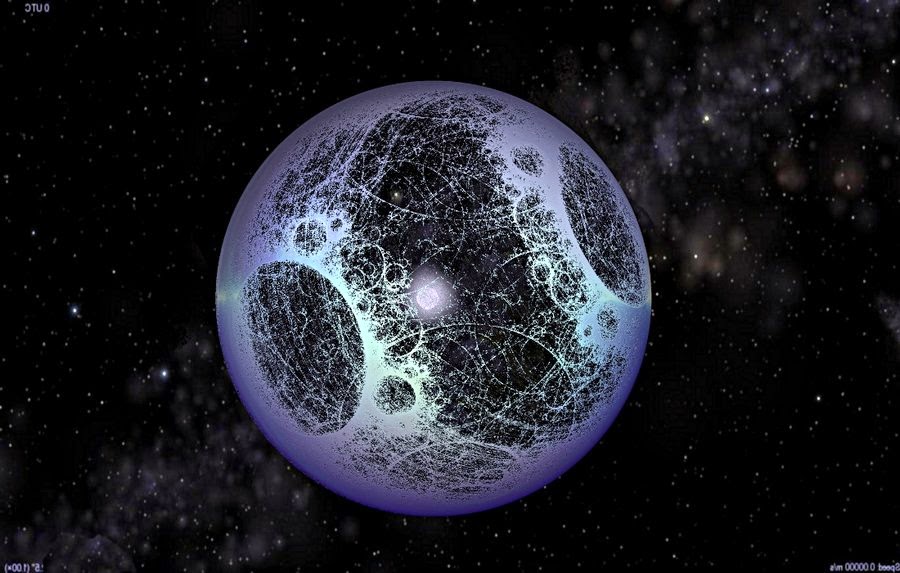
Over hundreds of years these large masses of rejected dust and dirt could start to form the basis of a small Dyson Ring or Sphere. Far fetched and distant but very possible.

This post post is meant to draw attention to a use for the useless. Space mining will have waste. When an asteroid is stripped and ground up, many of the minerals will not be worth saving or transporting, unless a use already exists.

This is simply a heads up that one man's waste is another man's resort island.

Saturday, June 27, 2015

Space to Earth Delivery

Currently most of the effort in the space industry is toward getting things into space. However, there will come a time when we will be trying to bring more stuff down from space. Materials mined from asteroids, completed manufactured goods, finished experiments, and other products that were mined, grown, or made in space will require a means to bring them back down.

Intuitive Machines' TRV (Terrestrial Return Vehicle)
NASA has already begun addressing this problem. Intuitive Machines' Terrestrial Return Vehicle is being created and is intended to begin testing on the ISS in 2016. The purpose of the vehicle will be to provide a quick means to deliver time sensitive experiments safely back to Earth where further analysis can take place which can't occur on the space station. The design is expected to be launched from the station and then maneuver to and land at the nearest spaceport.

Delivery from space is a very viable business opportunity. Especially since commercial space stations, primarily from Bigelow Aerospace, are only a maximum of 5-10 years away. While NASA is taking the approach of creating a special vehicle for the task that is not the only method or business model.

A delivery company from space could begin as simply an organizer. Buying space on returning capsules for materials from other space stations. This would actually change the business dynamic of commercial launches, who's operation generally relies on only one ticket, round-trip or one way, to one customer. As traffic increases one organization can purchase the trip up but then someone else can reserve the trip down.

The reason NASA and Intuitive Machines are creating a single miniature craft for the task of delivery from orbit is schedule flexibility. Renting space on a capsule is fettered with the schedule of the capsule launch. But cargo, particularly experiments, may have expiration dates. The TRV ensures rapid delivery whenever needed. Just like Amazon, same-day delivery is the holy grail.

So what is required for a technology that drops things from orbit on command and lands them safely? This is dependent on the cargo. The TRV is a smal craft for deliverying small experiments. The small size allows for multiple craft to be delivered to the ISS in a single launch. The TRV is also outfitted with a maneuvering system. It is basically a complete small spaceship.

TRV being launched from the ISS
The complete spaceship design for the TRV is acceptable for the current state of the art and the amount of cargo transported. But as time passes completely disposable spaceships may be too expensive. An alternate method could be something along the lines of a space gun which launches small capsules of goods which are delivered from locations in orbit. This would eliminate the need for internal propulsion of the capsules and may simplify capsule design from lifting body to the more common tear-drop shape. Though such a system would not be required for several decades. Until inter-orbit transportation and exchange is common. Basically the "space gun" would be the post office and there would be mailmen going around orbit picking up "packages" and delivering them to the "space gun."

Concept for blanket used in asteroid retrieval in space
Going even a step further and considering asteroid mining. At some point the materials within those rocks will have to be delivered to Earth if they are to have any value. The trouble is that most asteroids burn up as they enter our atmosphere. A method will have to be devised for delivering these rocks safely to the surface so their contents can be collected and sold. Something along the lines of an ablative blanket could be created which protects the asteroids from the heat of reentry. (similar to how asteroid miners plan to protect water rocks from the sun's heat) Or perhaps large skeletal landers could be created which have a heat shield and a parachute. These landers could be filled with mined material or raw asteroids and landed, then, perhaps, even reused.

While all the focus as been on getting into space the need to send stuff back is growing everyday. The ISS needs to return experiments. Planetary Resources may need to land rocks. Private space stations may need to return manufactured goods. There may even be a need to send parts down to earth to be repaired and returned at the next launch of a capsule.

In order to develop an economy in space a two-way exchange between Earth and space must be set-up. Getting up there is great, but it matters little to the world unless something comes back.


Saturday, November 29, 2014

Ecological Benefits of Space Mining

At The Space Economy we continually work to explain the benefits of space commercialization. One that has been overlooked by ourselves and the industry has been the ecological benefits of using resources from space. This pertains particularly to the mining industry.

Mining has a tremendous ecological impact on our planet. Mountains are literally removed every year on order to supply the raw materials needed for our increasingly industrialized planet. But this may not be a sustainable or required practice. Space mining would be capable of replacing it and without negative ecological impact.

Asteroids are rocks out of the ground already floating in space. Excavating them has no negative impact on our solar system, as long as it is not done in orbit. Thousands of times more material is also available in our solar system, which can be exploited, with proper infrastructure, which is growing ever closer.

Many space advocates sell it as something which is the future of our race as a means of survival from cataclysmic asteroid strikes and the like or as a means to satisfy the human needs to explore. While these reasons are founded, they do not resound with some parts of the population on earth. Space has to provide some other benefit than simply making money, exploring, and preventing destruction. Space must create a more encompassing return for Earth to be worth it. Ecology is one of those returns. The fact that the commercialization of space will help to solve ecological problems on Earth is a grand reason to work toward space.

Now, certainly many will argue that space mining will still have negative affects on earthen ecosystems. Because dirty rockets must be launched and rocks dropped from the sky.

This view has little credence as it assumes that rocket technology will remain as it is, which it won't, and that the asteroids would have to be delivered as raw materials to the surface of the Earth, which they won't. Space mining will revolve around the refining and manufacturing of materials in orbit (or possibly on the Moon) which can then be delivered to earth with a gliding space plane. And rockets are already powered by combinations of hydrogen and oxygen which combine to create...water. In fact, the kerosene burning Falcon 9 is "cleaner" than the solid rocket boosters of the space shuttle so we are already creating a greener space industry.

Mining companies would do well to explore space mining as a part of their future. Not only are the resources abundant, but the good will that it would generate by "working to preserve earth ecosystems" would be valuable to the company. And along the road space technologies developed could be applied to Earth problems. Caterpillar, which makes mining machinery, apparently sees this potential as it is partnering with NASA to develop space mining technologies.


Saturday, October 25, 2014

Asteroid Mining

Asteroid mining concerns the finding and then mining of any of the rocks which float around in the void.

In order to be successful, a mining company in space has to do just what a mining company on earth does. They have to prospect for potential mother loads. Then figure out how to extract the materials they want. And finally transport all of that material to some one who will buy it to build a space station or a cellphone.

Several companies are already working toward the goal of exploiting the resources which are available in space. Planetary Resources in near to launching their first asteroid tracking satellites and Deep Space Industries is developing technologies which will allow humans to refine and use the materials mined from the asteroids.

Mining has always been one of the main reasons for going to space. The vacuum above our atmosphere is not as empty as many believe. An abundance of raw materials float aimlessly in space. Approximately 37,000-89,000 tons of these rocks fall to Earth each year. The value of asteroids comes from the fact that many many of them are expected to contain quantities of rare earth metals, such as platinum, as well as basic elements like iron and sources of water.

Planetary Resources is currently focusing on the rare earth metals that asteroids could supply to earth markets.

However, many critic mining companies who are going for the rare materials which appear to be abundant in asteroids. The traditional argument is that as soon as a company creates as steady supply of the materials to the earth then the market will become saturated, prices will drop, and the ability to finance the expensive space missions will disappear.

While this argument is legitimate to a point (if gold were common it would not be valuable) it is short-sighted.

First rare earth materials like platinum will be in high demand for sometime no matter how large the supply is. Materials like platinum have untold untapped potential. The demand would grow if it were possible to work with pounds, instead of grams, of the metal and its cousins.

Secondly, companies like PR are nowhere near to creating a supply that will saturate the market. Within ten years they might be able to retrieve an asteroid the size of a basketball.

When space mining companies do grow they will quickly grow out of the need to rely on earth-based markets to pay the bills. Once the infrastructure is set up, these companies will be the ones to provide the water and raw materials to build space stations and colonies. The prime technology behind DSI is their zero-gravity 3-D printing technology which will allow them to turn rock and raw iron from an asteroid into a beam or plate or someday a rocket nozzle.

And concerning the inability to pay for expensive missions with the profits from mineral returns, that assumes that space launches and missions will remain expensive. This is clearly not the case seeing that space launch companies like SpaceX have already dramatically reduced the cost of launch and are continuing to do so.

In reality asteroid mining has far fewer market obstacles than many of the other space ventures being pursued.

Unlike the space launch industry, there is currently more than enough demand for the materials space mining companies intend to deliver. And that demand is not within the space industry but across many ranging from battery manufacturing to catalytic converters.

Mining companies also have an unlimited growth potential, however far into the future you look. No matter how technology changes the raw materials will always need to be collected to build the stuff.

Space mining is a great industry to be on the ground floor of right now because the demand is there and the possibilities are many. The only problem a fresh entrepreneur may have getting into the race is the cost of creating the technology to deliver the goods. Even though PR and DSI are using off the shelf components and micro vehicles they are still not cheap companies.

But, if someone in a garage would like to contribute to space mining there are some technologies which could be pursued quite easily.

Currently there is no definitive way to securely land a craft on small space body. The lack of gravity makes it almost impossible to just set down on the surface. Stemming from this problem is the problem of grabbing a rock and putting it in tow. And then once the asteroid is secured tools and techniques for actually mining it in space are still on the drawing board. Any of these problems are hardware and even software problems which can be pursued and solved on a shoelace budget and a little clever design.

Asteroid mining is happening. True, it is only in its early stages but there always has to be the first prospector to go to California and find the first nugget. Asteroid mining will be one of the foundations of the future space economy. The infrastructure it creates, information it gathers, and the materials it refines will support nearly every other aspect of space travel, colonization, and commercialization.

Here is a great presentation on the quantitative aspects of asteroid mining


Saturday, May 31, 2014

Space Water Refinery

In space, water is liquid gold. It is the heart of all life and of many space technologies by serving as a source of rocket fuel. But how does one get water in space? Water is actually quite plentiful in our solar system. It exists as ice on Mars and the Moon, inside of some asteroids, and is actually a primary component in comets. But, for any of this ice to be made usable by spaceships and colonies, it has to be extracted, melted, and even broken apart at an atomic level. While extraction is being developed by mining companies, the actual refinement of water into either drinkable liquid or rocket fuel has yet to be commercially developed, but such a "Water Refinery" would be an incredibly integral part of a developing space economy.

Water is the very basis of life. Humans can only survive a matter of days without it. This makes it one of the primary consumables on any manned space mission. The trouble is, at this point the only source of water for spacefarers is the Earth. Any water any astronaut drinks has to be shipped to them on an incredibly expensive rocket. Certainly, once the water is in space it can be recycled many times and reused by travelers, but the fact that water had to be blasted into space in the first place is a practice that can't continue. As more people begin to operate in space the need for drinkable water will increase and it will not longer be viable to get it all from Earth.

That is just for drinking water. There is also a market for the creation of rocket fuel. Currently, numerous satellites fall to earth because they run out of gas. And, as planetary travel grows there will be the need to fuel a fleet of rocket ships. As before, fuel can be created on Earth and then launched into space to fuel all these craft. And with dropping launch costs that will an option. But, the components of water, hydrogen and oxygen, are actually the most efficient rocket fuel that exists.

The technology to split water into these elements has existed for many years and similar processes been researched for applications in Mars colonies by NASA. So, instead of shipping fuel from Earth it would actually be possible to just grab a passing comet and turn its water into rocket fuel at a fraction of the cost of launching it.

Of course, there are many operations that have to be in place before a refinery can begin work. The bodies with water have to be mapped. They have to be collected, that is, brought to the refinery. Then, once under control, the asteroid/comet actually has to have the ice mined from its rock and metal.

Fortunately, these are all operations that are being developed and perfected by existing space mining companies. Planetary Resources and Deep Space Industries are space start-ups that have begun to develop the technologies needed to mine asteroids and comets and even process the materials. They both expect to have operating hardware in space within the next decade. This will give the creators of a space refinery plenty of time to develop their own final product. And they will be able to focus on taking water ice and turning it into liquid water and rocket fuel.

The main resource required by such a facility will be power. It must have copious amounts of electricity available to melt the mined ice, run it through filters for drinking, and perform electrolysis on it to create rocket fuel. This means that the main part of such an operation will be its power plant.

Early on it will most likely run on large solar arrays either connected to the facility itself or provided by a space utility company. It may be possible, and certainly preferable, to use nuclear energy if such technology is allowed into space as the industry develops.

Deep Space Industries Mining/Refining Concept
While such a refinery will need storage for its product, that may be a flexible option depending upon other developments in the industry. It may be possible for the refinery to partner with space gas stations or tankers which will be able to handle the storage and delivery issues associated with such a venture. Though if the pockets of the company are deep enough it could become the equivalent of an oil company here on earth which handles every part of the production process. From extraction of the raw material to putting it in a customers tank.

So the overall operation of such a refinery would be something along these lines. Someone goes out and collects the raw water ice from asteroids and brings it to the refinery. The refinery, which operates in planetary orbit, either purchases the ice or enters some kind of shared profit system with the mining company. The refinery is equipped with the power and storage facilities it needs to process the ice into drinkable water and fuel. This is then sold to companies that wish to keep satellites in orbit longer or to power ships onto new worlds. The model is identical to an oil company and will require great cooperation between space companies since the creation of all levels of production simultaneously by a single entity would be far to expensive.

Though getting such a company started may not be as difficult as it seems. If one were looking to start small and grow to become "The Space Refinery" it would be prudent to begin by creating and manufacturing small life-support systems that can be used by single craft or small bases to make drinkable water and purify existing supplies. This would create demand for the company in the current space industry.

Then, as permanent bases and long range re-usable craft begin to be developed, the refinery company could develop the fuel creation system. The two variations of the technology could be used in places like early moon bases like a backyard still. Such a strategy would make the company a major contributor to the industry early on and give it the position it needs to implement a larger-scale independent refinery in space when the demand arises.

Drinkable water and rocket fuel are the two primary consumables for anyone that operates in space. Any spacecraft must have fuel and any human must have water. The water needed to meet both of these needs is present in the void of space and can be exploited. The only thing that is required is an individual(s) that will work to become the "Water Baron" of space by creating the water refineries needed to exploit this abundant and necessary resource.
Tuesday, April 1, 2014

The Space Surveyor


Asteroid mining will become an integral part of the future space industry. Asteroids contain the vital water, precious metals, and raw materials for space companies to profit from and build with. But how does a future space miner know which asteroids could contain the mother load? They don't. At this point one rock is as good as another. But a company could be created who's sole purpose would be to explore asteroids and become "the" space surveyor who's product is information .

There are several ways a business for space surveying could be executed. It could create a network of earth-based telescopes that search for asteroids with certain sizes and orbits. It could create orbital telescopes that also look at size and orbit, but could see more and even do some basic spectrography on the rocks. And last, actual exploratory spacecraft can be created that go map and collect samples of asteroids.

A far as a profit strategy goes, the company would be in the business of selling information. It would provide data on all of the objects that it has explored. This data could be maps, locations, compositions. In return for this information, the surveying company could receive either a base fee or a piece of the profits that the mining company receives. With this strategy the surveying company would have very little risk and would be able to focus completely on developing better exploratory technologies.

If anyone is doubting the feasibility of this idea they should know that one company actually already is working towards all of the above concepts in an iterative process.  Planetary Resources, is just completing the  creation of an orbital asteroid surveying telescope that is small and inexpensive. The purpose of these telescopes will be to map as many Near-Earth asteroids as possible. Then PR is going to create surveying spacecraft that explore the asteroids that they find with the telescopes. Once that is complete, they intend to create the actual mining craft that will collect the asteroids and move them to where they need to go, like space stations, colonies, or lunar orbit.

The trouble with this model is that Planetary resources is trying to do everything themselves. They are trying to take on all of the development, deployment and management, of both the discovery and the mining of the asteroids. If they were to focus on just finding ideal candidates for mining, Planetary Resources would be able to become "the company" to go to to get information on viable asteroids to mine. With that being said, PR has been leveraging all kinds of income streams from their work so far, so it will not be surprising if they back off on their ambitions of mining in order to become the information company envisioned in this article.

Exploration will always be a part of the space industry. But as more companies look to the possibilities of space they will come to realize that it is much easier to ask for help than to "do it yourself." The space surveying companies that are being created now and in the future will be the "trail guides" of the new frontier. Telling the noobs where the best places to search for the gold is, for a price.