Pages

Showing posts with label Orbital. Show all posts

Sunday, May 28, 2017

Space Islands from Space Waste

Eventually there will come a time when humans are able to fully access and exploit the infinite raw materials in space. But there will be material which is disposed of as asteroids are mined for precious and useful metals. The rock and dirt will simply be thrown away. But this may be one of the most valuable material.

Space is a different environment from any that we have ever experienced on earth. On earth certain things can be ignored or discarded and they will simply be reabsorbed by the world until a use is found for them. Living in space doesn't afford the luxury of waste. As new industries and products are created that use the resources of space they must take a comprehensive view of how to use those resources.

Space mining will be one of the first to experience the need for total resource utilization as it will be the one of the first product-based industries in space. (satellites are a service-based industry)

Not all of what is mined from asteroids will need to be dropped to earth to be used. As it stands now the only thing worth dropping are the precious metals. But some of the other useless minerals will likely be turned into spacecraft, and large asteroids may be hollowed out to be turned into ships or space stations. But these processes are energy and engineering intensive. Another way could be created that would be used to create space real estate. All the left over materials could just be thrown into a pile with a little glue.

Masses of land could be built, with very little effort, from the debris left from space mining. From that, settlers and organizations could set up habitats on the bodies. These large bodies could have the benefit of special configurations and orientations. they could be built as large disks which can always face the sun, allowing access to a large energy source. They could become space docks. They could even be used as resorts.

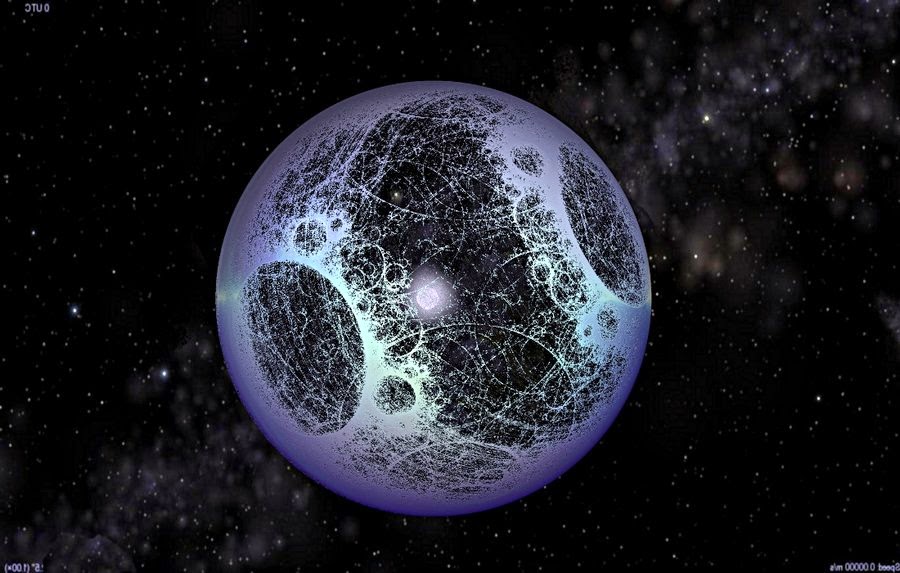
Over hundreds of years these large masses of rejected dust and dirt could start to form the basis of a small Dyson Ring or Sphere. Far fetched and distant but very possible.

This post post is meant to draw attention to a use for the useless. Space mining will have waste. When an asteroid is stripped and ground up, many of the minerals will not be worth saving or transporting, unless a use already exists.

This is simply a heads up that one man's waste is another man's resort island.

Saturday, February 27, 2016

Monday, July 13, 2015

Orbital Data Centers

Cloud computing is the idea of storing data on a server or having that server perform tasks so there is less load on your computer. But these servers are located in warehouses on Earth. They require large amounts of energy, they have a large footprint, and they have to transmit data over a distance to your computer.  What if server farms were placed into orbit? What if cloud computing occurred above the clouds?

Orbital server farms would have several benefits to their terrestrial counterparts. The first is power. In orbit there is an abundant supply of solar energy, twice as much as what enters our atmosphere and hits the ground. It is also possible to be in continuous sunlight. This provides a clean and inexhaustible power supply for the farm.

Next, there is an abundant amount of space in space. A server farm may grow as large or larger than any building on Earth with.

Last, concerning transmission time, space really is halfway to anywhere. Today and in the future satellite transmission will be common. The trip up and then back down takes only millionths of a second but that is very slow for a computer which works with billions of operations per second. Halving the distance of transmission by just sending information down, instead of up then down, would increase internet speeds.

But that is a far rosier picture than reality. While endless solar power is available in orbit it would still require huge arrays to power a server farm. The ISS solar array is the size of a football field and provides 110 kilowatts of energy, enough to power 55 houses. But a 55,000 square foot server farm on Earth uses 5 megawatts or enough to power 5000 homes. Clearly a development in space power systems will need to be built. But computing is becoming more efficient all the time so such power requirements may not remain standard.

Next, indeed a server farm may grow as large as it wishes in orbit. But with increased size comes increased weight and therefore higher launch costs. The cost of space launches would have to become a thousand times cheaper than the cheapest SpaceX launcher existing today in order to compete with terrestrial installment. However initial launch costs may be offset if lifetime power costs were lower due to orbital solar plants.

Last, while internet and communication speeds may be twice as fast by placing the servers in orbit this may not be a significant enough trade-off for the risks of creating such a facility. But Google and others are working on using satellites to provide internet connectivity to the world, adding a few servers to the satellites is not a great leap.

But perhaps the biggest problem of all to such facilities may be cooling. Servers become very hot and require constant removal of heat. But in space there are few options for heat removal. Heat can only leave by radiation. But a satellite using solar power is also constantly absorbing heat as thermal radiation. If a satellite also has a hot server farm at its center then a substantial thermal management problem arises.

Despite those challenges here is why such data centers will exist. Just as Google and Facebook are trying to provide internet connectivity to places where there is none, so to do they need to provide data storage and computation. Second, having large power hogging facilities in orbit will reduce the load on Earth power plants and not be in danger of blackouts while using the Sun's energy. Last, if humans go to Mars they will need computing power. But it makes no sense to attempt to land servers on Mars when they can perform just as well in orbit and perhaps provide services to multiple settlements. The same goes for the Moon. The effort of landing a sever farm on another body is to great when it can just be parked in orbit.

The latter scenarios may be where orbital computing systems begin. Providing computing resources to future Mars missions. Small server farms requiring nothing on the scale of terrestrial data centers could be created and then launched to support space missions. This is something that already has many engineering precedents in places like the ISS. It a project which is well within current technologies to achieve and could actually be built by a small firm or just a few people in a garage. From there such orbital data centers could follow a modular growth plan where new, self-contained modules are continuously combined to create ever large server farms which are able to finally provide meaningful quantities of computation to the world or other colonies.

Data centers in space are something which have potential and are currently feasible. However in order to scale them to compete with existing data centers in a substantial way requires growth and construction of other space resources. However, small scale orbital server farms can be created to support missions to other planets which will be coming in the next decades. Whether they will ever replace their cousins on the ground on Earth is unknowable until the industry develops more.


Sunday, July 5, 2015

Lunar Space Elevator

A space elevator will likely never be implemented in our lifetime on Earth. Space junk, material sciences, and general liability will all prohibit it from being a feasible system using any of the methods proposed thus far.

However, the space elevator is still incredibly viable in other locations. Small moons and large asteroids which have gravity but no atmosphere or space trash are ideal for space elevators. Since a space elevator can run off of electricity and is not limited by refueling or controlling explosions, it is far more reliable as a method of shipping items to and from orbit around a body.

The body most ideal for the first true space elevator will likely be the Moon. The Moon is a clean, fresh, low gravity environment which will undoubtedly be the base of most commercial mining and transport, due to its proximity to Earth and content of materials like Helium-3 and even water ice. The Moon will also possibly act as a spaceport to asteroid mining operations and even Mars colonization.

While rockets can be launched from the Moon easily they are still using consumable fuels. The need to use materials and weight to get something from the surface to orbit or vice versa is a waste. Rockets also break down easily, and are limited to a frequency of travel based on refueling operations and repairs. A space elevator has the potential to run off a clear view of the sun, is a simple machine compared to a rocket and is able to work 24-7 going up and down. Not to mention the fact that it is a fixed point of operations. It will always be in the same place ensuring there is no danger of missing a landing pad and hitting a habitat.

The construction of a space elevator is not as simple as just landing rockets however. The basic idea is to anchor a cable to the surface of the moon. That cable is then strung, from the surface, several thousand miles to a weight. This weight keeps the cable tight. It is similar to if you held a string with a ball on the end and then spun around. An elevator car can then run along the cable to and from orbit. All of this is possible with the materials available today. And while the set-up is risky and stringing several thousand miles of cable straight up from the Moon will be expensive, once established the elevator has little potential for problems afterward. And the cost to operate such a structure would be fixed over its lifetime just as the railroads are.

The economic benefits of a space elevator, once built on the Moon are enormous. Landing of scientific payloads would be faster and more reliable, since organizations would not have to develop landers, unless exploring other areas of the Moon. The elevator would allow for the creation of a space dock. This would be an area were spaceships would stop to unload and refuel while passengers and materials are moved to and from the Moon by the elevator.

Essentially the group that owns the elevator would own the only bridge to the Moon. It would be in the same situation as the early railroads. A colony would grow around it and all commerce would move through it. An important consideration when finding a location for such a structure.

As a business it could begin by simply offering transport to the surface at a reduced cost and increased reliability to building a lander. But as time goes on it could just be a toll elevator. A fixed cost transport one direction or the other, though seasonal costs will likely be a factor.

The business danger to this system is similar to the railroads. If it doesn't run there is still the fixed costs of  maintaining the system. Though we would hazard a guess that those costs would be minimal. Since the elevator comes into contact with nothing other than the vacuum of space environmental wear will be low. If used heavily enough it will require component maintenance but when that occurs the business will still be cash flow positive.

If the elevator were built tomorrow the real business challenge would be paying off the upfront construction cost in a timely manner while the industry catches up. Lunar mining will likely be the best solution since it can be performed autonomously and continuously. LiftPort is going this direction.

LiftPort is moving to build a lunar space elevator by 2020. The organization raised $100,000 on Kickstarter in 2014 to continue development of their design. They are intending to use a kevlar ribbon as the main cable of the elevator, which is the most vital and difficult component of the system. The elevator is meant cart lunar samples into orbit.

At this point LiftPort hasn't stated what the cost of construction would be. Though with possible launch costs and material cost it will undoubtedly be in the fractions of billions of dollars. If they succeed they will set a valuable precedent about the feasibility of the technology.

The space elevator continually appears in media as a technology to replace rockets on Earth. Unfortunately, there are just to many practical problems with such devices on our planet at this time. But space elevators are a very good idea in the correct areas. They are easy to operate, once built, and do replace rocket technologies with something more reliable. And while we have said many technologies will be valuable as businesses in the private space industry, lunar space elevators will likely be the most likely to succeed. Their superiority to conventional space transport is unrivaled from a technological and business standpoint. If a space elevator is built on the Moon those who own it will control much of the industry in that area. No one will swim a river when they can cross a bridge.

For more detailed information of space elevators see this NASA report on the technology:
The Space Elevator by Bradley Edwards Ph.D.


Saturday, June 27, 2015

Space to Earth Delivery

Currently most of the effort in the space industry is toward getting things into space. However, there will come a time when we will be trying to bring more stuff down from space. Materials mined from asteroids, completed manufactured goods, finished experiments, and other products that were mined, grown, or made in space will require a means to bring them back down.

Intuitive Machines' TRV (Terrestrial Return Vehicle)
NASA has already begun addressing this problem. Intuitive Machines' Terrestrial Return Vehicle is being created and is intended to begin testing on the ISS in 2016. The purpose of the vehicle will be to provide a quick means to deliver time sensitive experiments safely back to Earth where further analysis can take place which can't occur on the space station. The design is expected to be launched from the station and then maneuver to and land at the nearest spaceport.

Delivery from space is a very viable business opportunity. Especially since commercial space stations, primarily from Bigelow Aerospace, are only a maximum of 5-10 years away. While NASA is taking the approach of creating a special vehicle for the task that is not the only method or business model.

A delivery company from space could begin as simply an organizer. Buying space on returning capsules for materials from other space stations. This would actually change the business dynamic of commercial launches, who's operation generally relies on only one ticket, round-trip or one way, to one customer. As traffic increases one organization can purchase the trip up but then someone else can reserve the trip down.

The reason NASA and Intuitive Machines are creating a single miniature craft for the task of delivery from orbit is schedule flexibility. Renting space on a capsule is fettered with the schedule of the capsule launch. But cargo, particularly experiments, may have expiration dates. The TRV ensures rapid delivery whenever needed. Just like Amazon, same-day delivery is the holy grail.

So what is required for a technology that drops things from orbit on command and lands them safely? This is dependent on the cargo. The TRV is a smal craft for deliverying small experiments. The small size allows for multiple craft to be delivered to the ISS in a single launch. The TRV is also outfitted with a maneuvering system. It is basically a complete small spaceship.

TRV being launched from the ISS
The complete spaceship design for the TRV is acceptable for the current state of the art and the amount of cargo transported. But as time passes completely disposable spaceships may be too expensive. An alternate method could be something along the lines of a space gun which launches small capsules of goods which are delivered from locations in orbit. This would eliminate the need for internal propulsion of the capsules and may simplify capsule design from lifting body to the more common tear-drop shape. Though such a system would not be required for several decades. Until inter-orbit transportation and exchange is common. Basically the "space gun" would be the post office and there would be mailmen going around orbit picking up "packages" and delivering them to the "space gun."

Concept for blanket used in asteroid retrieval in space
Going even a step further and considering asteroid mining. At some point the materials within those rocks will have to be delivered to Earth if they are to have any value. The trouble is that most asteroids burn up as they enter our atmosphere. A method will have to be devised for delivering these rocks safely to the surface so their contents can be collected and sold. Something along the lines of an ablative blanket could be created which protects the asteroids from the heat of reentry. (similar to how asteroid miners plan to protect water rocks from the sun's heat) Or perhaps large skeletal landers could be created which have a heat shield and a parachute. These landers could be filled with mined material or raw asteroids and landed, then, perhaps, even reused.

While all the focus as been on getting into space the need to send stuff back is growing everyday. The ISS needs to return experiments. Planetary Resources may need to land rocks. Private space stations may need to return manufactured goods. There may even be a need to send parts down to earth to be repaired and returned at the next launch of a capsule.

In order to develop an economy in space a two-way exchange between Earth and space must be set-up. Getting up there is great, but it matters little to the world unless something comes back.


Saturday, August 30, 2014

Orbital Zoning


For nearly sixty years humans have been sending objects into orbit. Some are weather satellites, others digital TV, and some are just junk. Though there is a huge volume of orbital space above Earth to put satellites in, orbits are in fact filling up and and are largely uncontrolled. As the private space industry grows the need to zone and regulate orbits for particular uses and organizations will be increasingly necessary to create a safe and effective orbital airspace.

To clarify this concept let's look at a scenario. Imagine a company, such as Bigelow Aerospace, has constructed an orbital hotel. The station sits in an orbit several hundred miles above Earth. Now another company developing a space BattleBots show decided to set up shop in the same orbit. This is allowed because no one owns the orbit or can prohibit anyone else form using it. Unfortunately, the Spacebots end up smashing each other to pieces in the orbit, much to the enjoyment of Earth spectators. But now there is an increase of debris which could easily puncture the soft hull of the space station. While the Spacebots would be held accountable for the damage the entire problem could have been avoided if the space station was able to zone its orbit for only human occupation. This is a slightly silly circumstance but the point is clear.

The same type of situation is the reason that factories can't be built in residential areas here on Earth. Similar rules must be set up for space. It will not be possible for space to continually be treated as an international free area like Antarctica. People and organizations actually want to go to space and get something from it, in this case a location.

Orbits are real estate, just as on Earth. There are certain locations better suited for certain tasks and some that are filled with dangerous litter. But there are a lot of orbits above the earth. The 3-D nature of the Void allows for this, as well as the fact that everything in orbit is moving and can be coordinated.

So how does one go about defining property in a place where there are no boundaries but simply the "idea" of locations?

Well the simple place to begin would be with altitude. Space could be divided into more altitude layers. Within those altitudes one could then define particular orbits just as radio bands are defined on earth. Particular altitudes could be reserved for earth observation, others for communications satellites, and then the areas above the debris-filled orbits could be reserved for space stations.

Then within the altitudes particular orbital trajectories could be defined. A company would be able to purchase these trajectories and maintain its hardware within them . But this opens the question, from whom does one purchase an orbit, something which transcends any type of Earth boundary.

The likely solution would be to allow for homesteading of defined orbits. Organizations and Countries could agree to allow ownership of particular orbits through a system of placing improvements in them. Then once ownership of an orbit has been established, through the International Homesteading System, the orbits can be sold. This does require international cooperation but that is the case in many aspects of Space Law and a topic for another time.

Enforcement of homesteading boundaries will be an issue. How to keep vehicles in their space and ensure no one trespasses will initially fall to ground-based tracking and monitoring of payloads as they are launched. But eventually a Space Authority will have to be established to act as a "traffic cop" for Earth orbits. It would go around checking the authorizations of certain satellites to be in certain areas and perhaps "towing" them when they are not.

The issue of spy satellites will also be a problem. These craft are some of the best kept secrets in the world. Governments will not want to register spy satellites or even relegate them to particular altitudes. But as slowly as orbital space is filling this issue may resolve itself before it has to be addressed for private needs.

Space will eventually have to have a system of organization or regulation. Responsibility for space debris and sharing of orbits will become too large of issues to simply ignore. Orbits will become crowded and at that point everyone will want to know what is theirs, else the industry could become quite confrontational. This can't happen because it would be self-defeating to the development of a Space Economy.


Note: A particular example of where zoning of orbits would have been useful would have been in the Chinese Satellite Missile Test incident. Again, it is an issue of international relations but if the Space-Faring nations had collaborated to allocate weapons testing orbits, other nations and organizations could have avoided those areas and now not have to dodge debris.

Sunday, June 29, 2014

Space Food

A company for the manufacture and distribution of space foodstuffs.

Within the next ten years a permanent commercial human population will be established in orbit and beyond. But how will these people be supported. An entire industry based upon the needs of these space residents and tourists will need to be created.

Food will be the most difficult consumable to supply to these space communities. People can live with stale air and recycled water but food has to be an experience filled with flavor  as well as nutrition. But creating something that meets those two criteria while, ideally, having a shelf life of months, without refrigeration, is a tall order. In the old days salted pork with an occasional orange was considered a complete meal, our more civilized society must create something better for our explorers.

Food in space has been a challenge that even NASA has not  met yet. While they have learned to freeze, vacuum seal, irradiate, and store food so that much of it will not spoil on a long trip, and even still have some flavor, there are some foods which we take for granted on earth that are considered  delicacies in orbit because they simply can’t be prepared or obtained in space. Baking bread is a supreme challenge which isn't completely solved.

All the deficiencies in the cuisine of the Void are opportunities. Food is something that is easily redesigned and adapted while also having infinite possibilities and potential. And the best part is the products are needed today and not only in space but right here at home.

Many facets of the space food industry exist. The potential for space gardens and specific tools for accomplishing the kind of culinary feats that are possible on Earth are all applicable, but for the purposes of this post we will focus on the opportunity for providing prepackaged food that is meant to be a meal “practically” ready to eat in orbit.

Here in the early days of the space industry which is heavily focused on tourism and government contracts the food will have to be of a special kind of hybrid. It will have to provide a pleasurable experience that is unique to space but also contain the nutrition to allow someone to live off of it. This will require that a space food manufacturer create an initial product that is almost nostalgic, the kind of freeze dried and in a toothpaste tube that tourists would expect on a trip so that they can feel like their image of astronauts. But this paste would still be something that someone who isn't  just in space to visit can live off of.

In order to cut on costs it would likely be something along the lines of a paste or solid bar that can be shaped and formed into whatever the customer needs. So just like ice cream, where you can use vanilla as a base for chocolate or strawberry, this Space Paste would contain all the nutrition a person needs but could be flavored and shaped into whatever the customer wants. Soylent is a current product that very nearly meets this criteria.

Such a product would also need to deal with yet another problem brought on by space food, boredom. How many people can say that they love to eat oatmeal morning noon and night. Food is something that adds excitement and interest to our lives. A space food that can be practical, in that is can be packed stored and provide nutrition, but also fills the human need for change and diversity in flavor, is exactly what is needed today. 

Fortunately, unlike so much of the space industry, the technology and products developed for space food will not trickle down to be used in the earth food industry as so many space developments are claimed to do. It would, instead, be immediately and directly marketable without having to redesign any part of it. Imagine extremely dense nutritional supplements that are able to be packed and stored for years while remaining light weight. Such products could be loaded into disaster relief trucks or into hiking backpacks. Any company that produces such wears would not have to depend solely upon the space industry to sustain itself.

The competition in space food will be fierce. While food designed for space is applicable on Earth, the reverse is also true to some extent. After all it would not take a great deal of effort for brand name protein bars and supplements to be customized for space.  And the infinite variation of food doesn't allow for much protection through intellectual property. But a small start-up can certainly gain ground by moving now and gaining contracts with the rising private launch companies , with paying customers who want their space peanuts during the flight.

A company dedicated to space food would be something that would certainly be able to diversify. While an initial product would want to be a catch-all design, all further developments could  range from old style toothpaste tubes of peanut butter to the creation of the most advanced recipes and cooking equipment anyone has ever seen. Really, the creation of food in space is one of the most difficult pieces of chemistry that anyone has ever had to undertake.

The market for space food has existed for some time. Space museums and other tourist traps have long provided freeze dried cuisine just like the astronaut used to make. In the actual industry the government space agencies have been the only providers of TV dinners fit for the space station. This won’t continue to be sufficient. Human traffic is only going to increase and NASA is continuing to lose their budget and is not prepared for food production in large quantities. Just as new launch vehicle providers need someone to make spacesuits they need someone to cook meals. It can and needs to be done today, and even if it means freeze drying your favorite smoothie blend, it would better than what the industry has available now.

Wednesday, June 11, 2014

Space Sports

Until such a time as the Space Economy is able to produce materials and services that allow it to support itself, it will have to create products that provide something meaningful to the people on Earth. At this point, the space industry's transfer of material goods to and from space is not exactly a mass market. Even though they help to serve a mass market, (i.e. communication satellites) such activities do not immediately identify identify a space company as the provider of the service. If the space industry wishes to broaden its horizons it will have to create products and services that can be marketed to the more general population.

So what is a space product or experience that is out of reach of the normal person but can still be enjoyed and paid for by that individual? Well, an earth equivalent to this situation would would be professional football or basketball. Many people aspire to be great athlete but if it is out of their reach they are contented with simply being a fan of the experience. The creation of Space Sports would create an identical experience. Space Sports are an opportunity for the space industry to broaden its horizons beyond launch vehicles and government contracts.

A space sport would have to utilize zero gravity to its greatest potential. This means the players would have to be able to fly and maneuver within a large area. Think Ender's Game battle room. Normally, large spaces are difficult and expensive to attain in space. Even Bigelow modules would not do the trick. But it is not necessary to create an interior field for such a sport. With durable space suits and proper safety measures in place the "stadium" could just be a large cage in orbit that keeps the untethered players from flying into oblivion. Such a structure would simple to design, maintain, and deploy and would be magnitudes cheaper to build than a modern football stadium even with launch costs.

The sport itself would probably be a type of 3-D soccer, where the players pass a ball and attempt to put it through the other teams goal area. But there are no requirements for the sport, it could be dodgeball, or something where the teams have to catch robotic balls. This is a decision that would have to be made by the organization founding the sport.

Human players will be necessary. Since human spectators would not have the same connection to a competition of robots. This means that the facility will have to have attached living spaces for several dozen people. With launches priced at 60 million dollars, the teams will likely have to remain in orbit for the entire "season." Meaning a space station will need to be created at the "stadium" with life support and supplies on a scale that has never been attempted.

The cost of food and the construction of living space will be where the highest costs will come from. But these can be one-time costs if the station is outfitted with amenities like gardens and efficient recycling technologies that will minimize the need for re-supply. This way the station can be built and then becomes almost self-sustaining.

Sports are a great business because, once established, there are so many revenue sources. There are ticket sales, television contracts, advertising, and contracts with vendors. Nearly all of these money streams exist in space as well as on Earth. Television broadcasts of the "Space Matches" will be the primary source of income. As the tourist industry begins to blossom ticket sales will be an option. And, as far as vendors are concerned, for tourists to attend the matches, they will need to be fed and transported just as in stadiums on Earth. Partnerships with such space taxis and suppliers will be inevitable.

The risk involved with Space Sports is that they are not something that can be proven as "the next big thing." They would be an all or nothing gamble. But Space Sports have the potential to be a global phenomena devoid of cultural preference, since it would be the first new sport in nearly a hundred years to define the modern technological age. Its complete novelty would be its advantage. But if no one of the planet appreciates it, it will flop hard.

But the potential of the idea could be tested by simply building the "field" and then sending up a couple of teams to play a few televised games. The investment would be around 200 million dollars, for such a test, but is far less than creating an entire space station. If the response is favorable then the complete "stadium" and living area could be built.

Space Sports are something that will eventually come to pass. It is as inevitable as the colonization of Mars. the question is not "if" but "when." It's possible today to prove the concept with a few hundred million dollars. If successful it would give an added boost to the perception of the space industry and space itself and create an entirely new facet in the sports industry. And even though the investment is substantial, when a top professional football team has a value in the area of about 1 billion dollars, revenue of about 350 million dollars, and player expenses around 150 million, the risks and benefits of a Space Sport are nearly identical.

Saturday, May 31, 2014

Space Water Refinery

In space, water is liquid gold. It is the heart of all life and of many space technologies by serving as a source of rocket fuel. But how does one get water in space? Water is actually quite plentiful in our solar system. It exists as ice on Mars and the Moon, inside of some asteroids, and is actually a primary component in comets. But, for any of this ice to be made usable by spaceships and colonies, it has to be extracted, melted, and even broken apart at an atomic level. While extraction is being developed by mining companies, the actual refinement of water into either drinkable liquid or rocket fuel has yet to be commercially developed, but such a "Water Refinery" would be an incredibly integral part of a developing space economy.

Water is the very basis of life. Humans can only survive a matter of days without it. This makes it one of the primary consumables on any manned space mission. The trouble is, at this point the only source of water for spacefarers is the Earth. Any water any astronaut drinks has to be shipped to them on an incredibly expensive rocket. Certainly, once the water is in space it can be recycled many times and reused by travelers, but the fact that water had to be blasted into space in the first place is a practice that can't continue. As more people begin to operate in space the need for drinkable water will increase and it will not longer be viable to get it all from Earth.

That is just for drinking water. There is also a market for the creation of rocket fuel. Currently, numerous satellites fall to earth because they run out of gas. And, as planetary travel grows there will be the need to fuel a fleet of rocket ships. As before, fuel can be created on Earth and then launched into space to fuel all these craft. And with dropping launch costs that will an option. But, the components of water, hydrogen and oxygen, are actually the most efficient rocket fuel that exists.

The technology to split water into these elements has existed for many years and similar processes been researched for applications in Mars colonies by NASA. So, instead of shipping fuel from Earth it would actually be possible to just grab a passing comet and turn its water into rocket fuel at a fraction of the cost of launching it.

Of course, there are many operations that have to be in place before a refinery can begin work. The bodies with water have to be mapped. They have to be collected, that is, brought to the refinery. Then, once under control, the asteroid/comet actually has to have the ice mined from its rock and metal.

Fortunately, these are all operations that are being developed and perfected by existing space mining companies. Planetary Resources and Deep Space Industries are space start-ups that have begun to develop the technologies needed to mine asteroids and comets and even process the materials. They both expect to have operating hardware in space within the next decade. This will give the creators of a space refinery plenty of time to develop their own final product. And they will be able to focus on taking water ice and turning it into liquid water and rocket fuel.

The main resource required by such a facility will be power. It must have copious amounts of electricity available to melt the mined ice, run it through filters for drinking, and perform electrolysis on it to create rocket fuel. This means that the main part of such an operation will be its power plant.

Early on it will most likely run on large solar arrays either connected to the facility itself or provided by a space utility company. It may be possible, and certainly preferable, to use nuclear energy if such technology is allowed into space as the industry develops.

Deep Space Industries Mining/Refining Concept
While such a refinery will need storage for its product, that may be a flexible option depending upon other developments in the industry. It may be possible for the refinery to partner with space gas stations or tankers which will be able to handle the storage and delivery issues associated with such a venture. Though if the pockets of the company are deep enough it could become the equivalent of an oil company here on earth which handles every part of the production process. From extraction of the raw material to putting it in a customers tank.

So the overall operation of such a refinery would be something along these lines. Someone goes out and collects the raw water ice from asteroids and brings it to the refinery. The refinery, which operates in planetary orbit, either purchases the ice or enters some kind of shared profit system with the mining company. The refinery is equipped with the power and storage facilities it needs to process the ice into drinkable water and fuel. This is then sold to companies that wish to keep satellites in orbit longer or to power ships onto new worlds. The model is identical to an oil company and will require great cooperation between space companies since the creation of all levels of production simultaneously by a single entity would be far to expensive.

Though getting such a company started may not be as difficult as it seems. If one were looking to start small and grow to become "The Space Refinery" it would be prudent to begin by creating and manufacturing small life-support systems that can be used by single craft or small bases to make drinkable water and purify existing supplies. This would create demand for the company in the current space industry.

Then, as permanent bases and long range re-usable craft begin to be developed, the refinery company could develop the fuel creation system. The two variations of the technology could be used in places like early moon bases like a backyard still. Such a strategy would make the company a major contributor to the industry early on and give it the position it needs to implement a larger-scale independent refinery in space when the demand arises.

Drinkable water and rocket fuel are the two primary consumables for anyone that operates in space. Any spacecraft must have fuel and any human must have water. The water needed to meet both of these needs is present in the void of space and can be exploited. The only thing that is required is an individual(s) that will work to become the "Water Baron" of space by creating the water refineries needed to exploit this abundant and necessary resource.

Friday, May 30, 2014

Space Gas Station

 In order to create spacecraft, that can move around in Earth orbit and even to other planets, they have to have their tanks filled. Currently, any spacecraft in orbit goes until it runs out of fuel, then it plummets to the earth. Any manned spacecraft, like the ISS, must be refueled on a regular basis and is limited to Earth orbit since that is where the gauge hits empty for all current space vehicles. The creation of a "Space Gas Station" would create the ability to increase the operational longevity of current spacecraft as well as create a means for current capsules to top themselves off and move on into new missions.

If one is to look at some mission beyond Earth orbit, (Apollo or a Mars mission) normally, the procedure is to carry all the fuel required for the entire mission on a single launch vehicle. This is the equivalent to loading your car with all the fuel needed for a cross country trip. Such strategies greatly increase the cost of launch, especially when present prices are in the neighborhood of $10,000/lb. Certainly launches will become more economical in coming years as prices decrease, but there is still no reason to fill a vehicle with fuel when it could be filled with equipment or other supplies. True, the tanks will still exist, but the "Gas Station" would allow for smaller tanks on vehicles since journeys to fuel sources would be a bit shorter. Again, imagine a car going across country, but now with some gas stations along the way. Now you don't have to carry extra fuel or have such a large tank.

The primary issue with such a service, considering current launch technologies, is that the cost to lift the fuel for the "Gas Station" into orbit is identical to the cost of putting it up with the craft in the first place. For one-mission vehicles this is true. But what about satellites that need to maintain orbits, the ISS, an orbital taxi, or for the space shuttle to be boosted to a higher orbit, if it were still in service. In all of these cases the "Gas Station" makes a lot of sense. If a vehicle needs more fuel to continue a mission or to begin anew, then a location to refill is worth the price. Especially, when the other option is to organize a whole launch to refuel or build and launch an entirely new craft to replace the empty one.

For an example of a situation, where this would be usable today, imagine if a SpaceX Dragon capsule wanted to continue to Mars. Normally the capsule burns all of its fuel to reach orbit so that is its operational limit. If a "Gas Station" existed, the capsule could dock with it in orbit, fill up, and then fire its engines to break free of Earth gravity. This is, in fact, a maneuver that missions Like Mars One may need to consider but are only possible with a fuel station in place.

So the need for an orbital "Gas Station" certainly exists, even today. So what would it look like? If the Space Shuttle were still in operation one would assume that it could simply be one of the Shuttles' orange external tanks that was left in orbit and has since been refilled. But that is no longer an option. In the near future the creation of such a fuel depot would most likely require a series of launches with a Falcon Heavy hoisting filled tanks into orbit. These tanks could then either be combined into a single structure or spread throughout orbit to allow easier access to the fuel reserves.

In order to refuel craft, organizations would schedule dockings with the fuel stations through the operating company. Then they would fuel-up and pay based on the amount that they take. It would be identical to a normal Earth gas station.

In the beginning it would be necessary for the craft/organization in need of fuel to navigate to the fuel depot. But as the company operating the station grows it would be possible to implement mobile stations which go to where the fuel is needed or even to implement a team of drones to bring craft to it.

The technical challenges of such a project are significant. Rocket fuel is very hard to contain in large quantities for extended periods of time. Containing large quantities in orbit will be even more difficult. Then there is the problem of actually having the adapters needed to refuel the numerous variations of spacecraft. This will require the eventual creation on some type of standard across the industry.

Such an endeavor will require significant investment in early development and then the first launches. However, once the station is operational, the returns will come quickly, since the price of the fuel will be a markup of the the delivery cost to orbit. Such a station would likely only need to be emptied a few times to offset the cost of development and construction. One would have to determine the value, of the fuel, to organizations that want to give second chances to old craft, instead of launching new ones.

The expansion capabilities of such a fuel company would be unlimited. As the industry grows and space traffic increases multiple stations will need to operate in orbit and eventually around other planets. And as mining grows and water ice is brought back to Earth or the Moon the fuel stations can be filled with the refined hydrogen and oxygen. Thus reducing the price of the fuel.

These stations will become the waterholes of space. People will need and want to be near them. Because of this they could be the structures that space hotels and space docks are built off of in order to reduce the number of stops for human vehicles. Rental of such proximity space or connections will become lucrative for the company that owns the gas station.

Though the creation and implementation of an orbital fuel depot will be significant, it is a piece of infrastructure that will be so vital to the space industry that it will quickly pay itself off. It will be as important as the launch vehicles that carry the craft off of the Earth. While some billionaires are building space hotels and other the launch vehicles, it would not be a bad business decision to create a Space Gas Station.
Sunday, May 11, 2014

Space Sports Car


Ever since the very rich have existed there have been niche markets around their desires. Some of theses desires include mansions, yachts, sports teams, sports cars and even submarines. Why not continue that market philosophy into space by creating luxury or super high quality reusable spacecraft. A space sports car.

Such craft would be very similar to ships like the Lynx or even the SpaceShips One and Two. Small, reusable, and containing proven technology. But the similarity would end there.

Any kind of spaceship that would want to tout itself as a space sports car would have to have many more high-end attributes than the private spaceships currently available.

First, it would have to be able to be crewed by someone who does not have a history of test piloting. After all, the owner would probably want to fly his ship once in awhile.

Next, the ship would likely need to have increased capacity for systems that increase the performance and experience of the flight. These would allow for more "flying" instead of just floating around. Or, maybe, a better "kick" when they launch. No doubt, once having learned to fly the thing, the owners might like to be able to really drive it for awhile if in orbit, without worrying about fuel. Feeling the g's and maybe even buzz some space stations.

Lastly, aesthetic design will have to combined with engineering. Much like the Lamborghinis or Ferraris of today. They are not only built for superior function but also superior appearance. While in aerospace, science does lend to beauty slightly, a private spaceplane intended to function as a status symbol or a high performance toy could not look like a Mercury space capsule, though such designs may be optimal. It would have to be sleek and stylish. Custom paint, larger windows, better interiors. Everything about the craft would have to portray beauty and design, not just functionality, in order to increase the value of the experience. This means a departure from only engineers designing craft to bringing in industrial designers and artists to smooth out the rough edges.

The XCOR Lynx spaceplane
Reusablility can not be stressed enough. No one will purchase a 100 million dollar craft that they can only use once or have to spend 10 million on every time it launches no matter how rich they are. Whether orbital or suborbital the craft will have to be as simple to maintain and launch as a private airplane. Multistage will likely be out of the question. Therefore, such craft will likely begin as suborbital planes until technology develops enough for a Single Stage to Orbit (SSTO) system.

This type of company could be started immediately. With the advent of commercial, suborbital spaceplanes only one or two years away, it would be possible for a talented engineer and designer to purchase a few of these planes and upgrade them for wealthy, private individuals. This direction will probably be undertaken by companies like Virgin Galactic or even XCOR Aerospace once full production is underway.

Such a company would be able to operate on little initial capitol from the founders. The space cars could follow a pre-order system with initial money down, from the customer to start building, and then the rest of it when the project is complete.

As time goes on and the company grows and technology advances, it would be possible for the company to create original or custom designs for its clients. Instead of repurposing spaceplanes they would be able to create original "Lamborginis of the Void."

Obviously this type of a business is for a niche of a niche. Millionaire or billionaire thrill-seekers. There are only a few of those. Even with his own spaceplane company, Richard Branson would likely invest in a space Lamborgini, but Bill Gates certainly wouldn't.

The primary danger with any part of this concept is the market. First, if it is too small. And second, if it has too much liability attached. After all, your craft is meant to reliably transport the wealthiest of the wealthy.

The problem of the small market can be dealt with. Governments and large companies will want ships redesigned for any number of reasons. The beginning custom spaceplane shop would be able to get all kinds of business out side of its wealthy thrill-seeker target market.

As far as the second problem. There is nothing that can be done except to do the best you can and have a good insurance policy and lawyer for when someone crashes their space Ferrari.

Overall, the idea of creating the height of style and performance for space is something that can be accomplished within the next decade without gigantic research or investment. Such an approach would be a good means for talented young engineers and entrepreneurs to get their foot in the door of the space industry in a significant way.

Sunday, May 4, 2014

A Company for Reactivating Vintage Spacecraft

There are more spacecraft added to the menagerie in orbit every year. Some are operational. Many are
not. But that is not because they are broken.

Many spacecraft simply have served their purpose. They are no longer needed or have become out of date. So they are shut down.
A Space Junkyard from Star Wars
This collection of used satellites and probes (basically space junk) leaves an opportunity for entrepreneurs to repurpose them by simply regaining contact with them, creating new missions, and perhaps maintaining the vintage equipment needed to operate them.

The chance here is that the all of the expensive work of designing and launching the craft has already been done by someone else and now the scavenger gets all of that for free, outdated though it may be. All a new company would have to do is design new missions for the craft and recreate the tools needed to operate it. This just take a few software or electrical engineers

Now a satellite that used to monitor earth weather until its resolution became too poor, can instead become an open source orbital photography platform. Or it could be moved into a new orbit to be used as a practice dummy for docking. Or in the case of the ISEE-3 Reboot Project, it can be sent to study an asteroid.

The ISEE-3 Reboot Project is crowdfunding effort underway to perform the kind of spacecraft refurbishment just discussed. The group wishes to regain contact with a a defunct solar probe and command it to fire its engines so that is can be sent to explore a nearby asteroid. While they are doing this simply as an exercise and valiant research effort, the results from the project could be the foundation of a future space company.

The company that pursues this kind of a mission would basically just be the antique dealer of  spacecraft. You go to their shop and you find the CRT TV of spacecraft  and buy control of it to drop an anvil onto it.

And this company doesn't have to make the old satellites do anything complex. The regaining of a means of controlling them is of huge value. With that returned control, the space junk can be collected, repurposed, reused, scrapped, or eliminated. All necessary operations in the space industry gaining a litter problem.

Any company that regains control of defunct spacecraft would have a large foothold in the private space industry as it becomes the dealer of the vintage space paraphernalia. And really, all they would need is a few software developers, a ham radio set, and maybe a retired rocket scientist.

Wednesday, April 2, 2014

Mobile Space Power Plants

The Orbital Power Station (OPS) was a concept that was presented recently for providing large amounts of clean energy to Earth. However, what if it could also be used elsewhere? As colonies begin to be created on the Moon and even Mars they will need some source of power. What if a mobile power station (MPS) could be created to provide energy to these colonies.

The traditional plans for creating colonies (we'll focus on the Moon) have been to send all of the required equipment to the surface of the Moon and set it up there. But the trouble with this concept is that the location of the people is rarely the ideal location for the solar power station and vice-versa. On the Moon people will need to set up base in the walls of craters in order to be protected from meteors and radiation, but solar plants must be completely exposed. The extra labor of building an entire solar array separate from the base adds a great deal of cost and effort to a an already difficult endeavor.

Having the solar plant placed on the surface also creates the issue of night and day. Large battery banks will need to be installed to power the moon base at night. This adds weight to be shipped and more reliance on a system that can break down. The entire system of a terrestrial solar power plant is faulty and complex. The transport and the construction simply are too difficult.

But all of this can be avoided if 1-2 solar power plants were placed in orbit above the base. These plants would be able to provide continuous power to the base by beaming energy to the surface using microwaves or lasers. (All this is explained in Orbital Power Station) And since they would not have to land on the surface or even be on the same ship, landing craft would not have to carry as much fuel, reducing the cost of the mission. The only thing that would need to be installed on the surface would be a receiving array to gather the energy beamed by the power stations and this is much simpler than installing solar panels.

Power stations such as these would be relatively simple to create, especially if they are already in use around the Earth. They could simply be a rigid array of solar panels with an ion engine attached. Ion engines along the lines of VASMIR would be ideal for this application. Unlike most ships, the MPS would be able to provide the power needed for a high thrust ion engine. Making the cost of transport extremely cheap since little to no fuel is needed.

The one final advantage of an MPS is its continual mobility. If a base is finally outfitted with a reactor that provides the required power, then the MPS is able to move on to the next spot that needs it. In this sense it can have a very long operational lifetime. In addition, it wouldn't even have to move to another base. An MPS could function as a temporary power source for space stations under construction all around earth or even as a backup for faulty satellites. Keeping the lights on until their permanent power supplies come along.

The overall construction and technology of the MPS is proven already. The only development required would be in the energy beaming technology. But an early version, which simply serves as a stand-in in Earth orbit, wouldn't need that. It could be physically plugged into the customer spacecraft.

Because of its long life cycle and mobility any company to create an MPS would want to take the strategy of a standard utility. Charging by the amount of energy provided over a section of time. The return on investment would be slow, but since the MPS could move from one job to another it would almost never be out of work.

This is a very basic idea that does have a place in the future and current space industry. It may begin as a small power source for capsules on their way to the ISS and then move on to powering temporary science satellites until their orbit decays. These menial jobs will prove its viability for when the moon and Mars bases begin to be created.

Orbital Construction Yard


As the cost to launch materials into space decreases, larger and more complex structures will begin to be assembled around Earth. The construction of these space stations and ships will become a process far more involved than simply plugging a few capsules together. With complexity increasing, the cost of the construction will increase as individual companies create their own infrastructure to build these space stations. But that doesn't have to be the case. If there was a single construction organization or shipyard in space, populated with the necessary personnel and equipment needed to assemble and then place spacecraft, it would reduce the cost and the preparation required for the owners of the spacecraft.

The creation of a construction site in orbit would become the basis for all future space manufacturing. Imagine a potential application just ten years away. Bigelow Aerospace will most likely be starting to create space hotels from its inflatable space modules. But as it stands now, each capsule will have to be launched and positioned independently. This means the the space station will become something along the lines of the ISS today. A central spine with modules attached to it. This is because more complex configurations aren't possible with current construction techniques. For example if the Bigelow modules were to be constructed as a ring, in order to create an artificial gravity spin, it would be a much more complex assembly operation than using the traditional design and may not even be possible in some instances.


An orbital construction yard could solve all of those problems because it would be a single place to send all pieces of a project without having to consider the complex construction, because the the construction site would handle all of that. The construction station could create complex configurations because it would have the aid of robotic arms, and number of tools, and multiple workers, allowing them to place pieces very easily and in a controlled environment. Then, once constructed, each spacecraft could be deployed to its ideal location, making room for the next project.


But this kind of construction yard wouldn't even have to be just for construction. It could be in charge of the refurbishment of outdated equipment and the scavenging of ruined space craft. In this way it could become the trading post of used space parts and the single resource for keeping the growing number of satellites in good repair.

Going that far would require the station to keep a few small ships around that are capable of retrieving objects in need of repair. But the creation of robotic versions of that type of "Space Tug" is already underway by organizations like DARPA, the Chinese, and even the Swiss.

Swiss concept for a robot that could be a satellite scavenger
Now the concept is sound but what would be the technical implementation?  An initial station would essentially be a set of crew quarters and some basic equipment like Canadarms to perform the collection and orbital assembly of satellites. It could almost be a permanent Space Shuttle in orbit, something that can move freely in orbit in order to repair and assemble new systems. Then as the demand and the size of projects grow, the station could go from being mobile to being in a permanent location that companies bring the pieces to to have them assembled. This station would be something very similar to what people see in Star Trek shows. A large cage to contain floating parts and a series of robotic arms to position items as the crew assembles it.

An Early Mobile Space Construction Station
A Full Operating Space Construction Facility
The crews of these construction stations will be the most vital component. While they will be assisted robotically, human labor will always be necessary. These crews will be on par with the top astronauts today. Engineers with a fortitude to accomplish incredibly complex tasks alone in orbit. They will be familiar with all the current assembly techniques and will need to learn new ones just like construction workers on earth today.

The station most likely will not be able to support any kind of complex systems, like gravity simulation through rotation. Such systems would interfere with the work that must be done. These early stations will remain very much like current technology. A few modules for the crew to float through and very basic rations. But the conditions will be able to improve over time. As new projects come into the construction site the crew of the station will be well supplied, since any extra space on the launch vehicles could be dedicated to fresh amenities for the crew. And with that traffic there will undoubtedly be many opportunities to rotate the crew every few months. Overall the conditions will be nearly identical to that of the International Space Station (ISS) today, but with the potential of continual improvement

The business structure of such a station could be highly flexible. The company that creates these stations could deploy them and then sell them, like a house, to space companies wishing to perform their own construction in space. This would mean that the development and construction of the station itself would be all that is required, but the outfitting and manpower would be handled by the client. The other option is to completely own the station and lease construction and repair services to other companies and governments. This system requires much more infrastructure, such as robotic carriers and crews, to be handled by the station company. But, in the early stages this may be ideal to allow for more streams of revenue.

Any idea of creating a orbital construction site would be an incredibly expensive proposition. But the costs could be mitigated because the concept doesn't require an whole new system to be put in place. The station can function perfectly with the existing architectures in use, requiring little to no R&D. When the ISS comes up for retirement, it could even be retrofitted as such a station. Adding a few more Canadarms, a construction cage, and a vehicle for moving finished structures to their locations in orbit could make it perform quite well. Construction systems could even be piggy-backed off of future space hotels.

Overall, an orbital construction yard is simply a better means of creating, deploying, and maintaining space structures. Having a central location that has all the resources needed to assemble such projects would aide the industry greatly. Stations would no longer have to be designed to plug together one module at a time, certain spacecraft would be able to have new life breathed into them, and the construction yard might even become the centralized point of quality spacecraft parts from deconstructed spacecraft. Something very valuable to future space explorers.