Pages

Showing posts with label Space Station. Show all posts

Sunday, May 28, 2017

Space Islands from Space Waste

Eventually there will come a time when humans are able to fully access and exploit the infinite raw materials in space. But there will be material which is disposed of as asteroids are mined for precious and useful metals. The rock and dirt will simply be thrown away. But this may be one of the most valuable material.

Space is a different environment from any that we have ever experienced on earth. On earth certain things can be ignored or discarded and they will simply be reabsorbed by the world until a use is found for them. Living in space doesn't afford the luxury of waste. As new industries and products are created that use the resources of space they must take a comprehensive view of how to use those resources.

Space mining will be one of the first to experience the need for total resource utilization as it will be the one of the first product-based industries in space. (satellites are a service-based industry)

Not all of what is mined from asteroids will need to be dropped to earth to be used. As it stands now the only thing worth dropping are the precious metals. But some of the other useless minerals will likely be turned into spacecraft, and large asteroids may be hollowed out to be turned into ships or space stations. But these processes are energy and engineering intensive. Another way could be created that would be used to create space real estate. All the left over materials could just be thrown into a pile with a little glue.

Masses of land could be built, with very little effort, from the debris left from space mining. From that, settlers and organizations could set up habitats on the bodies. These large bodies could have the benefit of special configurations and orientations. they could be built as large disks which can always face the sun, allowing access to a large energy source. They could become space docks. They could even be used as resorts.

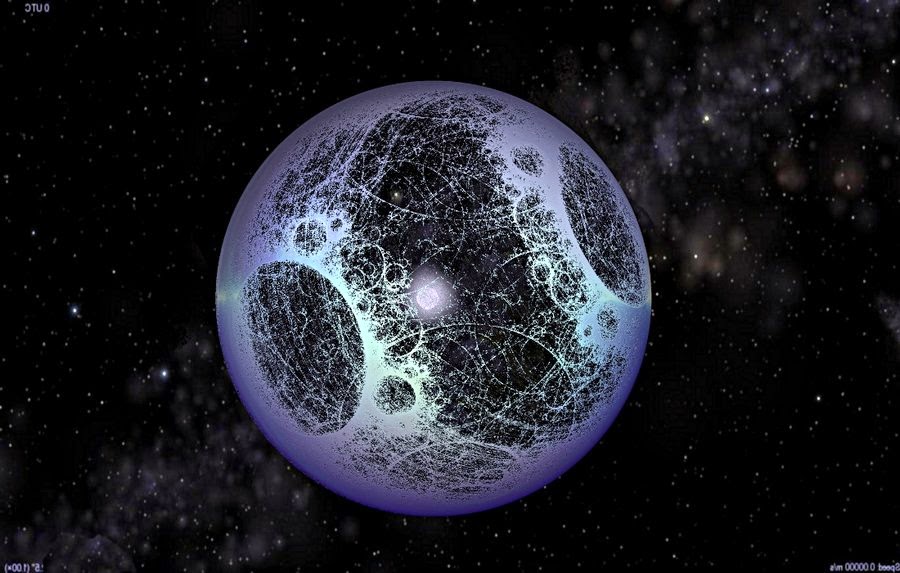
Over hundreds of years these large masses of rejected dust and dirt could start to form the basis of a small Dyson Ring or Sphere. Far fetched and distant but very possible.

This post post is meant to draw attention to a use for the useless. Space mining will have waste. When an asteroid is stripped and ground up, many of the minerals will not be worth saving or transporting, unless a use already exists.

This is simply a heads up that one man's waste is another man's resort island.

Saturday, June 27, 2015

Space to Earth Delivery

Currently most of the effort in the space industry is toward getting things into space. However, there will come a time when we will be trying to bring more stuff down from space. Materials mined from asteroids, completed manufactured goods, finished experiments, and other products that were mined, grown, or made in space will require a means to bring them back down.

Intuitive Machines' TRV (Terrestrial Return Vehicle)
NASA has already begun addressing this problem. Intuitive Machines' Terrestrial Return Vehicle is being created and is intended to begin testing on the ISS in 2016. The purpose of the vehicle will be to provide a quick means to deliver time sensitive experiments safely back to Earth where further analysis can take place which can't occur on the space station. The design is expected to be launched from the station and then maneuver to and land at the nearest spaceport.

Delivery from space is a very viable business opportunity. Especially since commercial space stations, primarily from Bigelow Aerospace, are only a maximum of 5-10 years away. While NASA is taking the approach of creating a special vehicle for the task that is not the only method or business model.

A delivery company from space could begin as simply an organizer. Buying space on returning capsules for materials from other space stations. This would actually change the business dynamic of commercial launches, who's operation generally relies on only one ticket, round-trip or one way, to one customer. As traffic increases one organization can purchase the trip up but then someone else can reserve the trip down.

The reason NASA and Intuitive Machines are creating a single miniature craft for the task of delivery from orbit is schedule flexibility. Renting space on a capsule is fettered with the schedule of the capsule launch. But cargo, particularly experiments, may have expiration dates. The TRV ensures rapid delivery whenever needed. Just like Amazon, same-day delivery is the holy grail.

So what is required for a technology that drops things from orbit on command and lands them safely? This is dependent on the cargo. The TRV is a smal craft for deliverying small experiments. The small size allows for multiple craft to be delivered to the ISS in a single launch. The TRV is also outfitted with a maneuvering system. It is basically a complete small spaceship.

TRV being launched from the ISS
The complete spaceship design for the TRV is acceptable for the current state of the art and the amount of cargo transported. But as time passes completely disposable spaceships may be too expensive. An alternate method could be something along the lines of a space gun which launches small capsules of goods which are delivered from locations in orbit. This would eliminate the need for internal propulsion of the capsules and may simplify capsule design from lifting body to the more common tear-drop shape. Though such a system would not be required for several decades. Until inter-orbit transportation and exchange is common. Basically the "space gun" would be the post office and there would be mailmen going around orbit picking up "packages" and delivering them to the "space gun."

Concept for blanket used in asteroid retrieval in space
Going even a step further and considering asteroid mining. At some point the materials within those rocks will have to be delivered to Earth if they are to have any value. The trouble is that most asteroids burn up as they enter our atmosphere. A method will have to be devised for delivering these rocks safely to the surface so their contents can be collected and sold. Something along the lines of an ablative blanket could be created which protects the asteroids from the heat of reentry. (similar to how asteroid miners plan to protect water rocks from the sun's heat) Or perhaps large skeletal landers could be created which have a heat shield and a parachute. These landers could be filled with mined material or raw asteroids and landed, then, perhaps, even reused.

While all the focus as been on getting into space the need to send stuff back is growing everyday. The ISS needs to return experiments. Planetary Resources may need to land rocks. Private space stations may need to return manufactured goods. There may even be a need to send parts down to earth to be repaired and returned at the next launch of a capsule.

In order to develop an economy in space a two-way exchange between Earth and space must be set-up. Getting up there is great, but it matters little to the world unless something comes back.


Saturday, October 4, 2014

Space Arena

Space Stations are one of the most expensive propositions in the private space industry. The only one in operation today is the ISS and it is estimated to have cost $150 billion in construction and occupation expenses. Certainly, the construction of the ISS is a poor example, especially when comparing to some technologies in the private sector. SpaceX is reducing cost of launching stations and Bigelow Aerospace is making stations simpler to build and deploy. But even so, constructing a "building" in orbit is not a cheap or easy proposition no matter how you look at it today.

The cost of a space stations is not all that surprising. After all it is something which has to provide all of the comforts of home (i.e. food, air, water) with none of the resources. It has to keep humans alive in one of the most inhospitable places for life that we know.

But does a space station really need to provide all of these resources in order to have value? What is a space station really for in the private space industry, as far as money-generating options?

A space station can be a place to rent space to companies to perform experiments in zero-g. It can become a space hotel to paying tourists. It can be a stop-over to someplace else.


These are all very viable industries once people gain a greater presence in space. But again, all of these "products" for a station to act as are incredibly expensive. Because they are meant to separate a person from the outside.

But if someone is going to go to space for the experience, they probably will not want to be separated from the outside by a cramped station or capsule. They will want to get the full benefit of the absence of gravity and the views of the planet and stars.

So why not build a station that doesn't protect anyone from the elements but instead just keeps them from getting lost. Build a station that is basically a giant cage.

Such a structure would basically be a Space Arena. A huge playing field where spacefarers can get the EVA experience without the safety hazards.

From a design standpoint it could be a huge geodetic structure which deploys to create a faceted sphere which is covered in a soft mesh that keeps things and people from floating away. Easy to build, deploy, and maintain. All of which decrease the cost of the station.

Instead of having to launch it in sections it could be launched in a single unit, perhaps on a Falcon Heavy, and then literally just sit there. Since it wouldn't require any complex life support systems those would not have to be maintained and since space has no other stresses than changes in temperature there is nothing to wear out the station structurally. And other resources such as the development of orbital tugboats become available, it wouldn't even be necessary to have much of an attitude control system.

With this kind of station all the travelers need is a spacesuit to keep them protected for the elements and a capsule to go sleep in. Both of which are already necessary for the trip. So why have a station which is a repeat of both of the other two just on another scale.

Since the permeable station is easier to construct and maintain is is easier to to make large. The size of such permeable stations allows them to be used by industries that have yet to consider space. The station could be used as a playing field for a space sport, creating a viable return and interest to people on Earth. It also gives a complete "space experience" to any tourists, much more effectively that a standard station. Just imagine the difference between seeing the curvature of the earth through a porthole and being able to have a panoramic view as you fly, un-tethered in the ether.

The experience and the low cost that such a "Space Arena" provides makes it a viable entry into the industry by many companies other than the standard aerospace and research firms. It is something that could be pursued by the entertainment or sports industry.

The business model for the company which owns the station could take any number of forms. If the station was built for space tourism it could be like a low cost motel. Travelers pay to use the space during the trip. If it is created to host space sporting events then it may pay for itself through the interest and entertainment value of the sport.

If you consider the Space Arena something akin to a stadium in orbit for sporting events it is actually much cheaper than earth-bound stadiums which run anywhere from $500 million into the billions. Whereas the cost to build and launch the Space arena would likely be only $150-200 million dollars. Still a huge gamble but it also has more utility and range of markets than a basketball stadium does.

The creation of a "Space Area" is something which really has very few technical hurdles. It is really a matter of "just doing it." The only things for a company or entrepreneur to consider with such a station is that it can increase the risk of a standard space excursion. Imagine someone in a space suit pushing off of one side of the sphere and then colliding hard with a structural member on the other side and perhaps over-straining their spacesuit causing it to rupture. Safety will be a huge concern for such a venture but materials and designs do exist which can help to mitigate most of these risks.

As far as space stations go the concept of a "Space Arena" or permeable space station are concepts which are relatively unexplored and potentially underestimated. They are a structure which can be easily and cheaply constructed and can be used to create a fantastic space experience both for those utilizing the station and to those on Earth, if it is used for televised sporting events.
Sunday, June 29, 2014

Space Food

A company for the manufacture and distribution of space foodstuffs.

Within the next ten years a permanent commercial human population will be established in orbit and beyond. But how will these people be supported. An entire industry based upon the needs of these space residents and tourists will need to be created.

Food will be the most difficult consumable to supply to these space communities. People can live with stale air and recycled water but food has to be an experience filled with flavor  as well as nutrition. But creating something that meets those two criteria while, ideally, having a shelf life of months, without refrigeration, is a tall order. In the old days salted pork with an occasional orange was considered a complete meal, our more civilized society must create something better for our explorers.

Food in space has been a challenge that even NASA has not  met yet. While they have learned to freeze, vacuum seal, irradiate, and store food so that much of it will not spoil on a long trip, and even still have some flavor, there are some foods which we take for granted on earth that are considered  delicacies in orbit because they simply can’t be prepared or obtained in space. Baking bread is a supreme challenge which isn't completely solved.

All the deficiencies in the cuisine of the Void are opportunities. Food is something that is easily redesigned and adapted while also having infinite possibilities and potential. And the best part is the products are needed today and not only in space but right here at home.

Many facets of the space food industry exist. The potential for space gardens and specific tools for accomplishing the kind of culinary feats that are possible on Earth are all applicable, but for the purposes of this post we will focus on the opportunity for providing prepackaged food that is meant to be a meal “practically” ready to eat in orbit.

Here in the early days of the space industry which is heavily focused on tourism and government contracts the food will have to be of a special kind of hybrid. It will have to provide a pleasurable experience that is unique to space but also contain the nutrition to allow someone to live off of it. This will require that a space food manufacturer create an initial product that is almost nostalgic, the kind of freeze dried and in a toothpaste tube that tourists would expect on a trip so that they can feel like their image of astronauts. But this paste would still be something that someone who isn't  just in space to visit can live off of.

In order to cut on costs it would likely be something along the lines of a paste or solid bar that can be shaped and formed into whatever the customer needs. So just like ice cream, where you can use vanilla as a base for chocolate or strawberry, this Space Paste would contain all the nutrition a person needs but could be flavored and shaped into whatever the customer wants. Soylent is a current product that very nearly meets this criteria.

Such a product would also need to deal with yet another problem brought on by space food, boredom. How many people can say that they love to eat oatmeal morning noon and night. Food is something that adds excitement and interest to our lives. A space food that can be practical, in that is can be packed stored and provide nutrition, but also fills the human need for change and diversity in flavor, is exactly what is needed today. 

Fortunately, unlike so much of the space industry, the technology and products developed for space food will not trickle down to be used in the earth food industry as so many space developments are claimed to do. It would, instead, be immediately and directly marketable without having to redesign any part of it. Imagine extremely dense nutritional supplements that are able to be packed and stored for years while remaining light weight. Such products could be loaded into disaster relief trucks or into hiking backpacks. Any company that produces such wears would not have to depend solely upon the space industry to sustain itself.

The competition in space food will be fierce. While food designed for space is applicable on Earth, the reverse is also true to some extent. After all it would not take a great deal of effort for brand name protein bars and supplements to be customized for space.  And the infinite variation of food doesn't allow for much protection through intellectual property. But a small start-up can certainly gain ground by moving now and gaining contracts with the rising private launch companies , with paying customers who want their space peanuts during the flight.

A company dedicated to space food would be something that would certainly be able to diversify. While an initial product would want to be a catch-all design, all further developments could  range from old style toothpaste tubes of peanut butter to the creation of the most advanced recipes and cooking equipment anyone has ever seen. Really, the creation of food in space is one of the most difficult pieces of chemistry that anyone has ever had to undertake.

The market for space food has existed for some time. Space museums and other tourist traps have long provided freeze dried cuisine just like the astronaut used to make. In the actual industry the government space agencies have been the only providers of TV dinners fit for the space station. This won’t continue to be sufficient. Human traffic is only going to increase and NASA is continuing to lose their budget and is not prepared for food production in large quantities. Just as new launch vehicle providers need someone to make spacesuits they need someone to cook meals. It can and needs to be done today, and even if it means freeze drying your favorite smoothie blend, it would better than what the industry has available now.

Wednesday, June 11, 2014

Space Sports

Until such a time as the Space Economy is able to produce materials and services that allow it to support itself, it will have to create products that provide something meaningful to the people on Earth. At this point, the space industry's transfer of material goods to and from space is not exactly a mass market. Even though they help to serve a mass market, (i.e. communication satellites) such activities do not immediately identify identify a space company as the provider of the service. If the space industry wishes to broaden its horizons it will have to create products and services that can be marketed to the more general population.

So what is a space product or experience that is out of reach of the normal person but can still be enjoyed and paid for by that individual? Well, an earth equivalent to this situation would would be professional football or basketball. Many people aspire to be great athlete but if it is out of their reach they are contented with simply being a fan of the experience. The creation of Space Sports would create an identical experience. Space Sports are an opportunity for the space industry to broaden its horizons beyond launch vehicles and government contracts.

A space sport would have to utilize zero gravity to its greatest potential. This means the players would have to be able to fly and maneuver within a large area. Think Ender's Game battle room. Normally, large spaces are difficult and expensive to attain in space. Even Bigelow modules would not do the trick. But it is not necessary to create an interior field for such a sport. With durable space suits and proper safety measures in place the "stadium" could just be a large cage in orbit that keeps the untethered players from flying into oblivion. Such a structure would simple to design, maintain, and deploy and would be magnitudes cheaper to build than a modern football stadium even with launch costs.

The sport itself would probably be a type of 3-D soccer, where the players pass a ball and attempt to put it through the other teams goal area. But there are no requirements for the sport, it could be dodgeball, or something where the teams have to catch robotic balls. This is a decision that would have to be made by the organization founding the sport.

Human players will be necessary. Since human spectators would not have the same connection to a competition of robots. This means that the facility will have to have attached living spaces for several dozen people. With launches priced at 60 million dollars, the teams will likely have to remain in orbit for the entire "season." Meaning a space station will need to be created at the "stadium" with life support and supplies on a scale that has never been attempted.

The cost of food and the construction of living space will be where the highest costs will come from. But these can be one-time costs if the station is outfitted with amenities like gardens and efficient recycling technologies that will minimize the need for re-supply. This way the station can be built and then becomes almost self-sustaining.

Sports are a great business because, once established, there are so many revenue sources. There are ticket sales, television contracts, advertising, and contracts with vendors. Nearly all of these money streams exist in space as well as on Earth. Television broadcasts of the "Space Matches" will be the primary source of income. As the tourist industry begins to blossom ticket sales will be an option. And, as far as vendors are concerned, for tourists to attend the matches, they will need to be fed and transported just as in stadiums on Earth. Partnerships with such space taxis and suppliers will be inevitable.

The risk involved with Space Sports is that they are not something that can be proven as "the next big thing." They would be an all or nothing gamble. But Space Sports have the potential to be a global phenomena devoid of cultural preference, since it would be the first new sport in nearly a hundred years to define the modern technological age. Its complete novelty would be its advantage. But if no one of the planet appreciates it, it will flop hard.

But the potential of the idea could be tested by simply building the "field" and then sending up a couple of teams to play a few televised games. The investment would be around 200 million dollars, for such a test, but is far less than creating an entire space station. If the response is favorable then the complete "stadium" and living area could be built.

Space Sports are something that will eventually come to pass. It is as inevitable as the colonization of Mars. the question is not "if" but "when." It's possible today to prove the concept with a few hundred million dollars. If successful it would give an added boost to the perception of the space industry and space itself and create an entirely new facet in the sports industry. And even though the investment is substantial, when a top professional football team has a value in the area of about 1 billion dollars, revenue of about 350 million dollars, and player expenses around 150 million, the risks and benefits of a Space Sport are nearly identical.

Saturday, May 31, 2014

Space Water Refinery

In space, water is liquid gold. It is the heart of all life and of many space technologies by serving as a source of rocket fuel. But how does one get water in space? Water is actually quite plentiful in our solar system. It exists as ice on Mars and the Moon, inside of some asteroids, and is actually a primary component in comets. But, for any of this ice to be made usable by spaceships and colonies, it has to be extracted, melted, and even broken apart at an atomic level. While extraction is being developed by mining companies, the actual refinement of water into either drinkable liquid or rocket fuel has yet to be commercially developed, but such a "Water Refinery" would be an incredibly integral part of a developing space economy.

Water is the very basis of life. Humans can only survive a matter of days without it. This makes it one of the primary consumables on any manned space mission. The trouble is, at this point the only source of water for spacefarers is the Earth. Any water any astronaut drinks has to be shipped to them on an incredibly expensive rocket. Certainly, once the water is in space it can be recycled many times and reused by travelers, but the fact that water had to be blasted into space in the first place is a practice that can't continue. As more people begin to operate in space the need for drinkable water will increase and it will not longer be viable to get it all from Earth.

That is just for drinking water. There is also a market for the creation of rocket fuel. Currently, numerous satellites fall to earth because they run out of gas. And, as planetary travel grows there will be the need to fuel a fleet of rocket ships. As before, fuel can be created on Earth and then launched into space to fuel all these craft. And with dropping launch costs that will an option. But, the components of water, hydrogen and oxygen, are actually the most efficient rocket fuel that exists.

The technology to split water into these elements has existed for many years and similar processes been researched for applications in Mars colonies by NASA. So, instead of shipping fuel from Earth it would actually be possible to just grab a passing comet and turn its water into rocket fuel at a fraction of the cost of launching it.

Of course, there are many operations that have to be in place before a refinery can begin work. The bodies with water have to be mapped. They have to be collected, that is, brought to the refinery. Then, once under control, the asteroid/comet actually has to have the ice mined from its rock and metal.

Fortunately, these are all operations that are being developed and perfected by existing space mining companies. Planetary Resources and Deep Space Industries are space start-ups that have begun to develop the technologies needed to mine asteroids and comets and even process the materials. They both expect to have operating hardware in space within the next decade. This will give the creators of a space refinery plenty of time to develop their own final product. And they will be able to focus on taking water ice and turning it into liquid water and rocket fuel.

The main resource required by such a facility will be power. It must have copious amounts of electricity available to melt the mined ice, run it through filters for drinking, and perform electrolysis on it to create rocket fuel. This means that the main part of such an operation will be its power plant.

Early on it will most likely run on large solar arrays either connected to the facility itself or provided by a space utility company. It may be possible, and certainly preferable, to use nuclear energy if such technology is allowed into space as the industry develops.

Deep Space Industries Mining/Refining Concept
While such a refinery will need storage for its product, that may be a flexible option depending upon other developments in the industry. It may be possible for the refinery to partner with space gas stations or tankers which will be able to handle the storage and delivery issues associated with such a venture. Though if the pockets of the company are deep enough it could become the equivalent of an oil company here on earth which handles every part of the production process. From extraction of the raw material to putting it in a customers tank.

So the overall operation of such a refinery would be something along these lines. Someone goes out and collects the raw water ice from asteroids and brings it to the refinery. The refinery, which operates in planetary orbit, either purchases the ice or enters some kind of shared profit system with the mining company. The refinery is equipped with the power and storage facilities it needs to process the ice into drinkable water and fuel. This is then sold to companies that wish to keep satellites in orbit longer or to power ships onto new worlds. The model is identical to an oil company and will require great cooperation between space companies since the creation of all levels of production simultaneously by a single entity would be far to expensive.

Though getting such a company started may not be as difficult as it seems. If one were looking to start small and grow to become "The Space Refinery" it would be prudent to begin by creating and manufacturing small life-support systems that can be used by single craft or small bases to make drinkable water and purify existing supplies. This would create demand for the company in the current space industry.

Then, as permanent bases and long range re-usable craft begin to be developed, the refinery company could develop the fuel creation system. The two variations of the technology could be used in places like early moon bases like a backyard still. Such a strategy would make the company a major contributor to the industry early on and give it the position it needs to implement a larger-scale independent refinery in space when the demand arises.

Drinkable water and rocket fuel are the two primary consumables for anyone that operates in space. Any spacecraft must have fuel and any human must have water. The water needed to meet both of these needs is present in the void of space and can be exploited. The only thing that is required is an individual(s) that will work to become the "Water Baron" of space by creating the water refineries needed to exploit this abundant and necessary resource.

Friday, May 30, 2014

Space Gas Station

 In order to create spacecraft, that can move around in Earth orbit and even to other planets, they have to have their tanks filled. Currently, any spacecraft in orbit goes until it runs out of fuel, then it plummets to the earth. Any manned spacecraft, like the ISS, must be refueled on a regular basis and is limited to Earth orbit since that is where the gauge hits empty for all current space vehicles. The creation of a "Space Gas Station" would create the ability to increase the operational longevity of current spacecraft as well as create a means for current capsules to top themselves off and move on into new missions.

If one is to look at some mission beyond Earth orbit, (Apollo or a Mars mission) normally, the procedure is to carry all the fuel required for the entire mission on a single launch vehicle. This is the equivalent to loading your car with all the fuel needed for a cross country trip. Such strategies greatly increase the cost of launch, especially when present prices are in the neighborhood of $10,000/lb. Certainly launches will become more economical in coming years as prices decrease, but there is still no reason to fill a vehicle with fuel when it could be filled with equipment or other supplies. True, the tanks will still exist, but the "Gas Station" would allow for smaller tanks on vehicles since journeys to fuel sources would be a bit shorter. Again, imagine a car going across country, but now with some gas stations along the way. Now you don't have to carry extra fuel or have such a large tank.

The primary issue with such a service, considering current launch technologies, is that the cost to lift the fuel for the "Gas Station" into orbit is identical to the cost of putting it up with the craft in the first place. For one-mission vehicles this is true. But what about satellites that need to maintain orbits, the ISS, an orbital taxi, or for the space shuttle to be boosted to a higher orbit, if it were still in service. In all of these cases the "Gas Station" makes a lot of sense. If a vehicle needs more fuel to continue a mission or to begin anew, then a location to refill is worth the price. Especially, when the other option is to organize a whole launch to refuel or build and launch an entirely new craft to replace the empty one.

For an example of a situation, where this would be usable today, imagine if a SpaceX Dragon capsule wanted to continue to Mars. Normally the capsule burns all of its fuel to reach orbit so that is its operational limit. If a "Gas Station" existed, the capsule could dock with it in orbit, fill up, and then fire its engines to break free of Earth gravity. This is, in fact, a maneuver that missions Like Mars One may need to consider but are only possible with a fuel station in place.

So the need for an orbital "Gas Station" certainly exists, even today. So what would it look like? If the Space Shuttle were still in operation one would assume that it could simply be one of the Shuttles' orange external tanks that was left in orbit and has since been refilled. But that is no longer an option. In the near future the creation of such a fuel depot would most likely require a series of launches with a Falcon Heavy hoisting filled tanks into orbit. These tanks could then either be combined into a single structure or spread throughout orbit to allow easier access to the fuel reserves.

In order to refuel craft, organizations would schedule dockings with the fuel stations through the operating company. Then they would fuel-up and pay based on the amount that they take. It would be identical to a normal Earth gas station.

In the beginning it would be necessary for the craft/organization in need of fuel to navigate to the fuel depot. But as the company operating the station grows it would be possible to implement mobile stations which go to where the fuel is needed or even to implement a team of drones to bring craft to it.

The technical challenges of such a project are significant. Rocket fuel is very hard to contain in large quantities for extended periods of time. Containing large quantities in orbit will be even more difficult. Then there is the problem of actually having the adapters needed to refuel the numerous variations of spacecraft. This will require the eventual creation on some type of standard across the industry.

Such an endeavor will require significant investment in early development and then the first launches. However, once the station is operational, the returns will come quickly, since the price of the fuel will be a markup of the the delivery cost to orbit. Such a station would likely only need to be emptied a few times to offset the cost of development and construction. One would have to determine the value, of the fuel, to organizations that want to give second chances to old craft, instead of launching new ones.

The expansion capabilities of such a fuel company would be unlimited. As the industry grows and space traffic increases multiple stations will need to operate in orbit and eventually around other planets. And as mining grows and water ice is brought back to Earth or the Moon the fuel stations can be filled with the refined hydrogen and oxygen. Thus reducing the price of the fuel.

These stations will become the waterholes of space. People will need and want to be near them. Because of this they could be the structures that space hotels and space docks are built off of in order to reduce the number of stops for human vehicles. Rental of such proximity space or connections will become lucrative for the company that owns the gas station.

Though the creation and implementation of an orbital fuel depot will be significant, it is a piece of infrastructure that will be so vital to the space industry that it will quickly pay itself off. It will be as important as the launch vehicles that carry the craft off of the Earth. While some billionaires are building space hotels and other the launch vehicles, it would not be a bad business decision to create a Space Gas Station.

Wednesday, April 2, 2014

Orbital Construction Yard


As the cost to launch materials into space decreases, larger and more complex structures will begin to be assembled around Earth. The construction of these space stations and ships will become a process far more involved than simply plugging a few capsules together. With complexity increasing, the cost of the construction will increase as individual companies create their own infrastructure to build these space stations. But that doesn't have to be the case. If there was a single construction organization or shipyard in space, populated with the necessary personnel and equipment needed to assemble and then place spacecraft, it would reduce the cost and the preparation required for the owners of the spacecraft.

The creation of a construction site in orbit would become the basis for all future space manufacturing. Imagine a potential application just ten years away. Bigelow Aerospace will most likely be starting to create space hotels from its inflatable space modules. But as it stands now, each capsule will have to be launched and positioned independently. This means the the space station will become something along the lines of the ISS today. A central spine with modules attached to it. This is because more complex configurations aren't possible with current construction techniques. For example if the Bigelow modules were to be constructed as a ring, in order to create an artificial gravity spin, it would be a much more complex assembly operation than using the traditional design and may not even be possible in some instances.


An orbital construction yard could solve all of those problems because it would be a single place to send all pieces of a project without having to consider the complex construction, because the the construction site would handle all of that. The construction station could create complex configurations because it would have the aid of robotic arms, and number of tools, and multiple workers, allowing them to place pieces very easily and in a controlled environment. Then, once constructed, each spacecraft could be deployed to its ideal location, making room for the next project.


But this kind of construction yard wouldn't even have to be just for construction. It could be in charge of the refurbishment of outdated equipment and the scavenging of ruined space craft. In this way it could become the trading post of used space parts and the single resource for keeping the growing number of satellites in good repair.

Going that far would require the station to keep a few small ships around that are capable of retrieving objects in need of repair. But the creation of robotic versions of that type of "Space Tug" is already underway by organizations like DARPA, the Chinese, and even the Swiss.

Swiss concept for a robot that could be a satellite scavenger
Now the concept is sound but what would be the technical implementation?  An initial station would essentially be a set of crew quarters and some basic equipment like Canadarms to perform the collection and orbital assembly of satellites. It could almost be a permanent Space Shuttle in orbit, something that can move freely in orbit in order to repair and assemble new systems. Then as the demand and the size of projects grow, the station could go from being mobile to being in a permanent location that companies bring the pieces to to have them assembled. This station would be something very similar to what people see in Star Trek shows. A large cage to contain floating parts and a series of robotic arms to position items as the crew assembles it.

An Early Mobile Space Construction Station
A Full Operating Space Construction Facility
The crews of these construction stations will be the most vital component. While they will be assisted robotically, human labor will always be necessary. These crews will be on par with the top astronauts today. Engineers with a fortitude to accomplish incredibly complex tasks alone in orbit. They will be familiar with all the current assembly techniques and will need to learn new ones just like construction workers on earth today.

The station most likely will not be able to support any kind of complex systems, like gravity simulation through rotation. Such systems would interfere with the work that must be done. These early stations will remain very much like current technology. A few modules for the crew to float through and very basic rations. But the conditions will be able to improve over time. As new projects come into the construction site the crew of the station will be well supplied, since any extra space on the launch vehicles could be dedicated to fresh amenities for the crew. And with that traffic there will undoubtedly be many opportunities to rotate the crew every few months. Overall the conditions will be nearly identical to that of the International Space Station (ISS) today, but with the potential of continual improvement

The business structure of such a station could be highly flexible. The company that creates these stations could deploy them and then sell them, like a house, to space companies wishing to perform their own construction in space. This would mean that the development and construction of the station itself would be all that is required, but the outfitting and manpower would be handled by the client. The other option is to completely own the station and lease construction and repair services to other companies and governments. This system requires much more infrastructure, such as robotic carriers and crews, to be handled by the station company. But, in the early stages this may be ideal to allow for more streams of revenue.

Any idea of creating a orbital construction site would be an incredibly expensive proposition. But the costs could be mitigated because the concept doesn't require an whole new system to be put in place. The station can function perfectly with the existing architectures in use, requiring little to no R&D. When the ISS comes up for retirement, it could even be retrofitted as such a station. Adding a few more Canadarms, a construction cage, and a vehicle for moving finished structures to their locations in orbit could make it perform quite well. Construction systems could even be piggy-backed off of future space hotels.

Overall, an orbital construction yard is simply a better means of creating, deploying, and maintaining space structures. Having a central location that has all the resources needed to assemble such projects would aide the industry greatly. Stations would no longer have to be designed to plug together one module at a time, certain spacecraft would be able to have new life breathed into them, and the construction yard might even become the centralized point of quality spacecraft parts from deconstructed spacecraft. Something very valuable to future space explorers.

Monday, March 31, 2014

Space Utility Company

Electricity is absolutely necessary for any and all space stations and space vehicles. Electricity warms or cools the interior, it creates drinkable water, and it even propels some craft. Modern spacecraft have to carry some means of power generation with them if they are meant to remain in space for any extended period of time. This is usually a set of solar panels and a bank of batteries. But these power generation systems add extra weight to the launch of these systems as well as the extra expense to design and integrate the system for each spacecraft. But this can all be avoided. Smaller versions of the Orbital Solar Power Station could be created as a means to power spacecraft. This would eliminate the need for each craft to have its own power generation system.

A space power station would essentially be a small solar plant. A group of solar panels or a mirror and turbine. But it would be outfitted with a wireless power transmitter, perhaps microwave or laser based. With this station in place, other spacecraft could simply be fitted with a receiver and then be placed near the power station in order to be given the power they need. This would reduce the amount of weight that the ship or station needs to have hauled into orbit and would reduce the design effort of making the ship completely self sufficient.

The power station would essentially become an orbital utility company providing power to anyone that wishes to be a included in it's "grid." It would be able to charge the companies/nations that own the powered spacecraft and would be able to grow with demand simply by adding either more stations or increasing the size of existing ones.

Orbital power stations for other spacecraft are a very viable business at this moment. Every spacecraft that is being designed is trying to cut weight. The elimination of a set of solar panels would be a huge step forward for the industry. Such a power station would not even be expensive to create. Some development of the beaming technology would be required, but the cost of launch and construction would be minimal. Since such a station could be sent into orbit with a single SpaceX Falcon Heavy launch, around 56 million dollars, cheap by space standards.

The dangers of this concept are that the station would never be allowed to have a power outage. A blackout could make millions of people become lost, if powering GPS satellites, or even kill someone, if powering an manned space station. But this can be avoided by simply creating a network of the stations to provide the appropriate redundancy.

The economics of this kind of a system have not been completely worked out. Whether it is a viable business model to replace individual solar systems with a single power station is numerically unknown. But if implemented properly, the ability to allow companies to save money in the short term by paying for less development and lower launching costs, will certainly attract many players in the space industry who launch satellites.

Overall, space power stations are something that would be a relatively cheap space business to get into  tomorrow, if the industry accepts it. It is something that can start small and grow organically, with the industry that has to have electrical power no matter what.

To see another variation of the Space Utility Company visit "Mobile Space Power Plants"

Orbital Power Generation

Electricity is the driving force of the modern world. It powers our homes, our devices. It controls traffic and heat. For many, being without electricity would be equivalent to being without the sun each day. And this need will only continue to grow.

Electric vehicles will become more prevalent and possibly even replace gas engines. The world population is growing, with it the demand for electricity in houses and devices. Not to mention the fact that one-quarter of the world is currently without electricity and will eventually have it. Even without that growth, demand for electricity today is more than the supply. New means of power generation must be created.

As science progresses nuclear power plants may be able to move toward fusion instead of fission. This would create a great amount of power and would most likely meet the demand. But at this point that is not a viable option or even near to becoming one.

Renewables also have room for improvement but are viable. But no matter how efficient solar or wind become they will simply occupy too much space and continue to be an eyesore. While they have a small carbon footprint, their physical footprint is too large to meet future demand.

Here is the opportunity for space. There is plenty of space up in space. Anything in orbit around the Earth is invisible to the naked eye. We also have an unobstructed view giant fusion reactor at the center of our solar system, the Sun. Orbital solar power is a proven technology and is potentially a huge source of electrical power.


The reason solar power is so inefficient on earth is due to two problems. The atmosphere and engineering limitations.

The atmosphere absorbs a majority of solar energy before it ever reaches the ground on a clear day, not to mention night-time and when there is heavy cloud cover. This is not a problem in orbit because there is no atmosphere. And while there would still be day and night, they are not equal. An orbiting station can remain in sunlight for 99% of an orbit.

From the engineering standpoint, solar cells are only around 10-15 percent efficient today. However, unlike something like fusion, the performance of solar cells is increasing yearly. But there is no requirement to use solar cells either. An orbital station could just be a large mirror that focuses the sun energy onto a steam turbine in the station.

There is only one problem with a solar orbital station. How does the power get from orbit to the ground? It would have to be through wireless transmission. This could be done through microwaves or lasers. Both are proven technologies. However they require receiver stations on the ground. While these stations would have to be of a size comparable to a  standard solar station today, they would be fewer in number.

With the wireless power transmission there is a liability involved. If the transmission beam strays from the receiver station, it could potentially cause damage to nearby areas. But this is simple to control and the worst damage that has been predicted is sunburns a little more quickly.

The initial cost of the station, with current infrastructure, is too great to substantiate the construction of it. Studies performed by SERT (Space Solar Power Exploratory Research and Technology Group) found that launch costs would have to be as low as $100-$200 a pound to make the concept financially feasible. Current launch costs are at best $10,000 a pound. But with the development of reusable vehicles that price will drop to the range required.

The orbital construction costs would also be something to consider. Anyone working to create an orbital power station would want to have a very clear construction infrastructure in place. This could be robots or even a dedicated manned space construction station. Neither of these exists today. But if the power station were designed as along the lines of an inflatable that could be assembled with very few pieces the infrastructure would not be nearly as necessary.

At this moment all of the technology for an orbital solar power station exists and is proven. The trouble is that the infrastructure to build it is not in place. This is changing rapidly, but resources for such a project will not be complete enough for at least another ten years. But at that point, the demand for electricity will have risen to such a degree that orbital stations will likely be a necessity and a large business opportunity.


Below are links to the National Space Society's site concerning Orbital Solar Power Stations
NSS Space Solar Power Webpage
NSS Space Solar Power Library