Pages

Showing posts with label colonization. Show all posts

Sunday, May 28, 2017

Space Islands from Space Waste

Eventually there will come a time when humans are able to fully access and exploit the infinite raw materials in space. But there will be material which is disposed of as asteroids are mined for precious and useful metals. The rock and dirt will simply be thrown away. But this may be one of the most valuable material.

Space is a different environment from any that we have ever experienced on earth. On earth certain things can be ignored or discarded and they will simply be reabsorbed by the world until a use is found for them. Living in space doesn't afford the luxury of waste. As new industries and products are created that use the resources of space they must take a comprehensive view of how to use those resources.

Space mining will be one of the first to experience the need for total resource utilization as it will be the one of the first product-based industries in space. (satellites are a service-based industry)

Not all of what is mined from asteroids will need to be dropped to earth to be used. As it stands now the only thing worth dropping are the precious metals. But some of the other useless minerals will likely be turned into spacecraft, and large asteroids may be hollowed out to be turned into ships or space stations. But these processes are energy and engineering intensive. Another way could be created that would be used to create space real estate. All the left over materials could just be thrown into a pile with a little glue.

Masses of land could be built, with very little effort, from the debris left from space mining. From that, settlers and organizations could set up habitats on the bodies. These large bodies could have the benefit of special configurations and orientations. they could be built as large disks which can always face the sun, allowing access to a large energy source. They could become space docks. They could even be used as resorts.

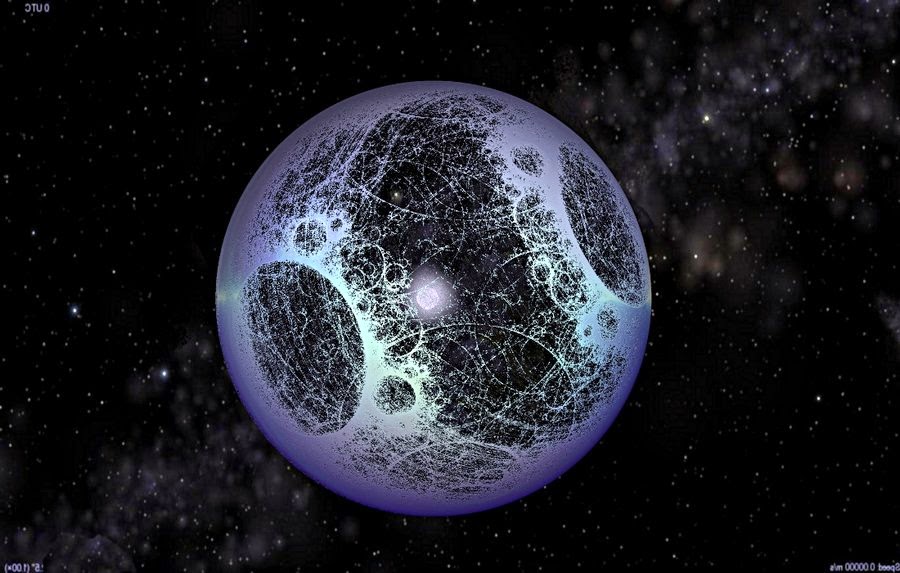
Over hundreds of years these large masses of rejected dust and dirt could start to form the basis of a small Dyson Ring or Sphere. Far fetched and distant but very possible.

This post post is meant to draw attention to a use for the useless. Space mining will have waste. When an asteroid is stripped and ground up, many of the minerals will not be worth saving or transporting, unless a use already exists.

This is simply a heads up that one man's waste is another man's resort island.

Sunday, February 21, 2016

Nuclear Devices in Space

Here is an essay that was written by one of the authors for a college course several months ago. We thought you might enjoy it though it might be better to just skim it. This paper was meant for an uninitiated audience.

Mars has long been a target of space colonization. This little planet is actually quite similar to Earth in many different ways. But in order for Mars to be a planet that is truly amenable to humans, that is, a place where people can go and walk in the Martian sun as one would on Earth, the planet has to be terraformed. Terraformation is the global engineering of a planet’s environment (Moss). In Mars’ case terraformation refers to the heating of the planet. Several methods for terraforming
Elon Musk with Stephen Colbert
Mars have been put forward. These ideas have included pumping greenhouse gases into the atmosphere or dropping asteroids on the planet. But the concept which is now receiving the most attention is one referenced by Elon Musk on the Late Show with Stephen Colbert. When Colbert asked what it would take to make Mars livable, Musk replied that “There are two ways, the fast way and the slow way.”(Colbert) The slow way was to use greenhouse gases to hasten global warming on Mars. The fast way was to drop thermonuclear weapons on the poles. It was the fast way which has received the attention.

In order for Mars to be the planet which humans leave Earth for, it will have to be terraformed. The use of nuclear weapons is one of the most practical methods of accomplishing the task. While technological challenges exist even with this approach, it will be the geopolitical and interplanetary ethics which will pose the greatest challenge to any type of Mars transformation.

Why is it that Musk believes that thermonuclear weapons would be ideal for terraforming Mars? The goal behind the plan is to create a runaway greenhouse effect on Mars. Mars is full of carbon dioxide. The tenuous atmosphere that exists there already is primarily carbon dioxide, and the poles are composed of frozen carbon dioxide, or dry ice. Detonation of nuclear weapons over the poles is expected to heat them enough to release huge amounts more CO2 into the atmosphere. Ideally, this initial release of CO2 would heat the planet enough that more CO2 would be melted, and from that warming more still, continuously until all the dry ice has been melted and ejected into the atmosphere. From there plants can be introduced to convert the CO2 into oxygen. Nuclear weapons are ideal to start this process because they are understood, powerful and compact. Other options for starting the process of CO2 release require huge infrastructures and technologies which have not yet been developed.

However, even though the plan is feasible technologically it is almost insurmountable politically. The current Outer Space Treaty which is signed by most nuclear powers of the world, and all space powers, states that no weapons of mass destruction will be placed in space (United Nations). Basically, the global UN treaty prohibits nuclear weapons in space. There is a possibility that the treaty can be amended to allow thermonuclear devices to be deployed for the peaceful purposes of terraforming Mars. After all, peaceful applications of thermonuclear devices in space have never been a large consideration. Also, conveniently the treaty does not apply to individuals or companies, and may become even less of a factor.

A bill up for vote in the U.S. senate is set to give companies control of extracted materials from asteroids, (Fecht) even though the UN treaty states that no country may control any resources in space. The U.S. bill will set a precedent for private organizations to make decisions about space utilization outside of international treaties. The bill will also allow for the United States to develop local legislation to allow private organizations to decide the fate of Mars. So essentially, the U.S. may not be internationally allowed to unilaterally claim parts of space or Mars, but it can provide the resources to a private company, not bound by the treaty to terraform Mars. This all operates under the assumption that the Space Act of 2015 is ratified by Congress. But it does present the possibility that Elon Musk could obtain the means to terraform Mars with nuclear devices as a peaceful utilization of the devices without forcing the U.S. to break its treaty.

If the humanitarian effort to terraform Mars with nukes was ratified by the UN, or enabled by U.S. legislation, there would be multiple primary objections to the possibility, both are based on safety. In order to get to space one must take a rocket. Rockets, the world over, only have a success rate of, at best, 96 percent (Lafleur). What would occur if a rocket carrying a nuclear device exploded upon launch (Jauregui)? Also what should occur if terrorists or hackers hijack the device and point it back towards Earth. These are the concerns of a nuclear device being launched.

The latter argument is inconceivable. Such a device would have higher than normal military security. It would not be as if it is a basic laptop to be hacked. If the nuclear arsenal of the US has not been breached then neither will a rocket to Mars be compromised.

So, regarding the issue of a failure. This is a legitimate concern. But what few people realize is that there have already been multiple nuclear payloads sent into space. The Curiosity rover uses a radioactive device to power itself which would have disintegrated should it have exploded at launch. There have also been multiple SNAP-10A fission reactors launched since the 60’s (Bennett). Thus far there have been no accidents. But the reality is that even if one of these nuclear devices were to explode in the rocket the danger of radioactive fallout would be minimal. A nuclear blast creates dangerous fallout because it is able to eject decaying plutonium in all directions very energetically and evenly. A rocket exploding is a firecracker in comparison. The reactor and its contents would fall out of the sky and into the ocean, not spread like a plume across a continent. Overall, the dangers of safety are arguments similar to saying that we might get hit by a car if we cross the street, so one should never cross a street. It would not be negligent to attempt to launch a nuclear cargo to Mars.

So, assuming that nuclear devices have been approved to go to Mars and detonate, the next argument for the opposition would be that of the ecological impacts such an act would have on Mars itself (Jauregui). These objections stem from the idea that humans do not fully understand Mars yet. Mars has been considered one of the prime locations in the solar system to find life or remnants of life. Mars is theorized to have once been very earthlike, warm and wet. These theories lend credence to the idea that there are either fossilized or living organisms to find on Mars (Johnson). But should humans go and start nuking the planet, they could obliterate evidence of that past Martian life, or possibly even that life itself if it still exists. This issue can be likened to endangerment and human caused extinction of animals on Earth. The trouble is on Earth there are other resources, other solutions to deforestation, on Mars those options are limited because terraformation is required to even open the door to those other possibilities. Mars must be terraformed in order to provide a human presence that is capable of fully understanding and studying the planet. This cannot be achieved with rovers, but it can with humans.

There exists the possibility that small colonies will be established before the planet is terraformed. The stations would conduct the science to prepare the planet for the terraformation and design the process. While performing these studies scientists would be able to conduct the final surveys for life. If found, the organisms can be protected from the terraformation process so that they can be fully studied. In this way the transformation of the planet will not eliminate any potential existing residents, and the scientific value of those organisms can be viably and organically retained.

Mars is generally touted as a second planet for humans, to ensure that if a life ending event occurs
on one planet the other will preserve the human race. Should initial preparation and study of the planet not be performed the terraformation should continue. It is not appropriate to put the protection of a hypothetical organism or fossil ahead of the actual dangers posed to the fully conscious and creating organisms that are human. Some would say that the dangers to Earth are of the same probability of getting hit by a car while crossing a street, which I presented previously, therefore why should Mars be colonized out of fear. To this let us be clear, if human protection was the only reason then there would be no interest in Mars. Humans can’t fight the urge of a donut even though it could kill them. The idea of a multi-planetary society extends far beyond survival as a benefit. These include solving problems such as population density, political oppression, and economic growth. A new planet allows humans to develop in ways that we have never seen since Europeans started coming over to the Americas. Mars is bare ground for people to create a new start. The colonization must occur for human progress to continue. That is indeed more valuable than a scientific curiosity which may or may not exist, and would still be able to be studied even after the terraformation. The development of the human race is also a hypothetical which is justified through the data of history and how expansion has improved quality of life but also scientific and economic ability to protect and understand environmental issues.

Elon Musk is a marketing genius. He often drops hints and ideas in order to improve visibility of projects he is working on. But he is also a proven achiever of lofty goals. He already operates several technology companies, one of which provides orbital rockets to service the International Space Station. When Elon Musk states that nuclear weapons are a viable method for preparing Mars for human colonization, it is generally a well substantiated belief and even future plan he is working on (Masunaga). Terraforming a planet with nuclear devices is a possibility (AOL.com), and though there are hypothetically-based concerns about it, none of them are legitimate enough to prohibit the plan. The primary issue with actually implementing it will be the fears of what may occur on Earth, either due to potential political backlash or a failure of the vehicle carrying the devices failing. It is possible that the political hurdles can be overcome and the other is a concern based on hyperbole. Nuclear devices can and should be used to prepare another planet for human development.


Bibliography
 Bennett, Gary. "Space Nuclear Power: Opening the Final Frontier." 4th International Energy Conversion Engineering Conference and Exhibit (IECEC) (2006). Print.

"Citation Machine Automatically Generates Citations in MLA, APA, Chicago, Turabian, and Harvard." Citation Machine: Format & Generate Citations รข€“ APA, MLA, & Chicago. Imagine Easy Solutions. Web. 25 Sept. 2015.

Colbert, Stephen. "Elon Musk Might Be A Super Villain." YouTube. YouTube, 10 Sept. 2015. Web. 17 Sept. 2015.

 Fecht, Sarah. "Is Space Mining Legal?" Popular Science. Popular Science, 23 Sept. 2015. Web. 25 Sept. 2015.

 Jauregui, Andres. "Sorry, Elon Musk: One Does Not Simply Nuke Mars Into Habitability." Huffington Post. Huffington Post, 11 Sept. 2015. Web. 25 Sept. 2015.

Johnson, Carolyn. "Ancient Lake on Mars Could Be a Prime Target in Search for Life - The Boston Globe." BostonGlobe.com. Boston Globe, 27 Mar. 2015. Web. 25 Sept. 2015.

 Lafleur, Claude. "Spacecraft Stats and Insights." The Space Review:. The Space Review, 5 Apr. 2010. Web. 25 Sept. 2015.

 Masunaga, Samantha. "What Scientists Say about Elon Musk's Idea to Nuke Mars." Los Angeles Times. Los Angeles Times, 11 Sept. 2015. Web. 25 Sept. 2015.

Moss, Shaun. "Terraforming Mars." Mars Papers (2006). Print.

"SNAP-10A." Wikipedia. Wikimedia Foundation. Web. 25 Sept. 2015.

"United Nations Office for Outer Space Affairs." Outer Space Treaty. United Nations Office of Space Affairs, 19 Dec. 1966. Web. 25 Sept. 2015.

 "Why Elon Musk's 'nuking Mars' Idea Isn't All That Far-fetched." AOL.com. 10 Sept. 2015. Web. 25 Sept. 2015.
Sunday, July 5, 2015

Lunar Space Elevator

A space elevator will likely never be implemented in our lifetime on Earth. Space junk, material sciences, and general liability will all prohibit it from being a feasible system using any of the methods proposed thus far.

However, the space elevator is still incredibly viable in other locations. Small moons and large asteroids which have gravity but no atmosphere or space trash are ideal for space elevators. Since a space elevator can run off of electricity and is not limited by refueling or controlling explosions, it is far more reliable as a method of shipping items to and from orbit around a body.

The body most ideal for the first true space elevator will likely be the Moon. The Moon is a clean, fresh, low gravity environment which will undoubtedly be the base of most commercial mining and transport, due to its proximity to Earth and content of materials like Helium-3 and even water ice. The Moon will also possibly act as a spaceport to asteroid mining operations and even Mars colonization.

While rockets can be launched from the Moon easily they are still using consumable fuels. The need to use materials and weight to get something from the surface to orbit or vice versa is a waste. Rockets also break down easily, and are limited to a frequency of travel based on refueling operations and repairs. A space elevator has the potential to run off a clear view of the sun, is a simple machine compared to a rocket and is able to work 24-7 going up and down. Not to mention the fact that it is a fixed point of operations. It will always be in the same place ensuring there is no danger of missing a landing pad and hitting a habitat.

The construction of a space elevator is not as simple as just landing rockets however. The basic idea is to anchor a cable to the surface of the moon. That cable is then strung, from the surface, several thousand miles to a weight. This weight keeps the cable tight. It is similar to if you held a string with a ball on the end and then spun around. An elevator car can then run along the cable to and from orbit. All of this is possible with the materials available today. And while the set-up is risky and stringing several thousand miles of cable straight up from the Moon will be expensive, once established the elevator has little potential for problems afterward. And the cost to operate such a structure would be fixed over its lifetime just as the railroads are.

The economic benefits of a space elevator, once built on the Moon are enormous. Landing of scientific payloads would be faster and more reliable, since organizations would not have to develop landers, unless exploring other areas of the Moon. The elevator would allow for the creation of a space dock. This would be an area were spaceships would stop to unload and refuel while passengers and materials are moved to and from the Moon by the elevator.

Essentially the group that owns the elevator would own the only bridge to the Moon. It would be in the same situation as the early railroads. A colony would grow around it and all commerce would move through it. An important consideration when finding a location for such a structure.

As a business it could begin by simply offering transport to the surface at a reduced cost and increased reliability to building a lander. But as time goes on it could just be a toll elevator. A fixed cost transport one direction or the other, though seasonal costs will likely be a factor.

The business danger to this system is similar to the railroads. If it doesn't run there is still the fixed costs of  maintaining the system. Though we would hazard a guess that those costs would be minimal. Since the elevator comes into contact with nothing other than the vacuum of space environmental wear will be low. If used heavily enough it will require component maintenance but when that occurs the business will still be cash flow positive.

If the elevator were built tomorrow the real business challenge would be paying off the upfront construction cost in a timely manner while the industry catches up. Lunar mining will likely be the best solution since it can be performed autonomously and continuously. LiftPort is going this direction.

LiftPort is moving to build a lunar space elevator by 2020. The organization raised $100,000 on Kickstarter in 2014 to continue development of their design. They are intending to use a kevlar ribbon as the main cable of the elevator, which is the most vital and difficult component of the system. The elevator is meant cart lunar samples into orbit.

At this point LiftPort hasn't stated what the cost of construction would be. Though with possible launch costs and material cost it will undoubtedly be in the fractions of billions of dollars. If they succeed they will set a valuable precedent about the feasibility of the technology.

The space elevator continually appears in media as a technology to replace rockets on Earth. Unfortunately, there are just to many practical problems with such devices on our planet at this time. But space elevators are a very good idea in the correct areas. They are easy to operate, once built, and do replace rocket technologies with something more reliable. And while we have said many technologies will be valuable as businesses in the private space industry, lunar space elevators will likely be the most likely to succeed. Their superiority to conventional space transport is unrivaled from a technological and business standpoint. If a space elevator is built on the Moon those who own it will control much of the industry in that area. No one will swim a river when they can cross a bridge.

For more detailed information of space elevators see this NASA report on the technology:
The Space Elevator by Bradley Edwards Ph.D.


Sunday, June 28, 2015

Space Bioengineering

Space is a new environment. A clean slate. As far as we know devoid of even simple life. A new environment where living creatures have never prospered requires new creatures that have never existed. While machines are being developed to take people and other machines into space, organisms need to be developed to allow us to stay there and build an economy and society.

DARPA has already begun exploring the possibilities of genetically modified  or synthetically created organisms with which to terraform Mars. However the creation of of genetically modified animals has any number of other applications. Plants with increased oxygen producing ability. Bacteria for breaking down asteroids. Modified food producing organisms for colonies. Organisms that can convert human waste into bioluminescent light instead of using electricity. And even bacteria which could solve health hazards to humans caused by radiation or low gravity.

The reason genetic engineering has not been widely accepted and experiences great resistance on Earth is the fact that genetic engineering is considered unnatural. To introduce a man-made plant or organism into the Earth ecosystem is generally considered dangerous due to the side-effects that may arise. An example could be that weeds can adopt a genetically engineered resistance to common herbicides. Or that genetically modified food has detrimental health affects.

These potential problems with genetically engineered organisms is due to their foreignness to the normal ecosystem. Something which evolves 200 years in one or two affects its competition and consumers in ways not anticipated. It is the reaction of the environment which causes opposition to genetic modification not the modified species themselves.

Another argument to genetic modification has been the ethical question of if humans should exercise such powers. This is a question that cannot be answered in this essay. Though, as a guess, this question is still based on the protection of the natural environment.

In space there is no natural environment. It is a microwaved wasteland with no biology. For this reason many of the arguments for using biologically or synthetically engineered organisms fall apart. There is not an ecosystem to ruin with the introduction of a designed-for-space organism.

However, there will still be resistance to the use of such organisms. This something which space bio-engineering firms will have to be prepared for. Just as deserts and forests are preserved from irrigation or clearing to preserve their natural beauty, so to may barren planets be defended from terraformation. This is a legal question which will have to be addressed in future as such applications as terraformation go from theory to fact.

Also, while at the moment introduction of genetically modified organisms may be acceptable in space the industry must be careful in future to ensure that created ecosystems are kept clear of dangerous or invasive species.

From a business perspective bioengineering could be comparable to any other human space product in market size, perhaps even larger as terraformation becomes a possibility. But on the smaller scale humans, being natural creatures, require natural solutions to space survival. A typical technological carbon scrubber on a space station in not as effective or efficient as a common plant. But rare is the plant that collects high volumes of CO2 and can flourish in the low temperatures of Mars.

Not only are new organisms needed for space, they are required. The new environments are so foreign to anything that exists on Earth that finding an existing species to perform some task may be nearly impossible. (excluding bacteria that can survive in space while in hibernation) Selective breeding and cross breeding would be far to slow. Just as one has to leap a hundred miles straight up to reach space so must organic life "leap" in survival skills and production to survive in space. Genetic engineering is the only method available to make that leap.

Sunday, June 21, 2015

Invasive Species in Space

Tardigrades or "water bears" can survive the extremes of space
From time to time one will hear of something called “invasive species.” Invasive species are organisms which are introduced to an area where they have no competition and thus begin to roust the native species and wreak havoc with the ecosystem. Such species include numerous noxious weeds, fish such as carp, and animals like pet pythons.

Nearly all of these invasive species were introduced by human interaction. A seed stuck to a boat, a pet released into a swamp, etc. All of these species which began as only one or two loose seeds have become major problems on our planet and within many countries as they can destroy what makes a river, lake, land desirable in a particular area.

It is too late now to point this out as all the harm has been and is being done now. However there is no reason to allow it to continue, at least for some time.

It has been said many times that humans are on the cusp of an exodus to space. The price of launches is expected to decrease dramatically in the coming decades so that a trip into the void could be within the range of vacation expenses. There are also plans to begin colonizing Mars. But will the mistakes of old be overlooked? Will we carry invasive or undesirable species with us as we move into space?

The Curiosity Rover being assembled in a clean room
NASA and other space agencies have long worked to ensure that biocontamination does not occur between its craft and the heavenly bodies they explore. And yet even with all the scrubbing, baking and sanitizing that is performed on craft such as rovers, they have  been found to still harbor microbes which could colonize the Red Planet before humans. If highly polished equipment is still carrying bacteria what is expected to occur when people are throwing suitcases into the cargo hold of a spaceship for a vacation? Mosquitoes might be released into what could have been an Eden.
The private space industry is moving quickly to develop technologies for transportation. But as the transit becomes more viable the industry must remember to perform the annoying housecleaning tasks and consider them before history is simply repeated. Invasive species are a large problem on Earth where they have little competition, but they could be devastating to a space mission if resilient bacteria  were introduced to a colony’s single water supply where there is no competition. Not to mention the potential extraterrestrial conservation issues such an outbreak might incur.

While a cleaning bureaucracy does not need to be created to hinder the industry it is something that should be developed before it is needed. Because when a biological invasion occurs it will appear as gross negligence on the part of the industry. From that will spawn a truly hindering organization.
The industry must work on problems such as invasive species and others which are all preventable. This will show responsibility and due diligence which will give the industry leeway when other unforeseeable problems occur.

As always, this potential cleaning problem opens an opportunity for space entrepreneurs. Currently space rovers are not being cleaned completely. But they are being cleaned as well as they can be. This means that new methods of scrubbing spacecraft need to be developed as well as means of containing microbes and large potential invasive species during manned flights.

Such a business could begin life performing basic cleaning on spacecraft going into orbit. Basically a prepper for low risk launches. Then as more rovers are deployed and more people move into space launch companies could solicit the services of such a company to screen passengers and cargo for potential biohazards and invasive species. Some launch companies may elect to do this themselves but until launch reliability is the same as an airplane launch companies will likely not wish to hold the liability for a potential infestation of a space station. A company dedicated to the screening and cleaning of cargo and people could develop the methods and the technologies to keep invasive and dangerous species out of pure areas.

Those who do not learn from history are doomed to repeat it. Weeds, reptiles, germs, fish and many other kinds of creatures have repeatedly been carried into areas where they can wreak havoc and destroy something that was devoid of such organisms. In space, humans have a completely clean slate. We can have any kind of flora or fauna we want. But there must be means of keeping what shouldn’t go to space from going to space. A few mosquitoes would completely ruin a trip to a space station.

Thursday, January 29, 2015

Interplanetary Communications Company

As the space industry begins to look beyond Earth orbit, communications systems better than those currently used will need to be implemented.

Let's focus entirely on communication with Mars. This is the target planet for most manned missions and the Moon is able to communicate directly with Earth without special systems.

In order to communicate effectively with Mars there are a couple issues that must be overcome. One is the six minute time-lag caused by the distance to Mars. The other is the fact that signals are periodically blocked by wither the planets or the sun moving in front of the communication satellites.

The second problem is the simplest to solve. It just requires more satellites. Perhaps two around each planet so that the signal is never hidden when the satellite goes behind the body. At least two would have to be built around the sun for the same reason. Mars One is utilizing a system like this for its communication with the colony it intends to establish. But they will only be using three satellites. One around each planet and then the sun. This system will ensure that there is only a few two hours periods of blackout when a planet is in the way as well as two week periods when the sun gets in the way.

While the system is effective, for a limited mission, it is not ideal as the colony grows and activity increases. Two weeks of blackout will not be acceptable. A problem of bandwidth will also arise, with increases traffic, which will require multiple satellites in order to transfer information quickly and reliably enough.

Eventually an network of dozens of satellites around the sun and each planet will have to be created to ensure optimized 24/7/365 communication between the bodies.

Then comes the issue of time lag between planets. Relativity stops us from overcoming this problem with available technology. There is no way to have a live conversation effectively between Earth and Mars. So ways of creating the illusion of instant connectivity will have to be created.

Again using Mars One as an example. They intend to allow astronauts to download websites to a colony server to browse on a regular basis. All this requires is a periodic data-dump to the colony with a copy of your Facebook feed from 4 hours before.

The trouble with this system is that it requires a server in the colony, taking up weight and space. If a single company was maintaining the "phone network" then satellites around Mars could be outfitted with local servers just for the purpose of storing information. This would not only reduce the requirements on each new Mars mission to integrate local servers in place of food, but also allows for Mars to develop an information independence of Earth as it grows. Such a system would ensure that Mars would have a completely formed information infrastructure that anyone on the planet could access without having to build it themselves.

Now this is an audacious goal, one which would take perhaps decades to implement but it can begin now. A space communications company can be created which could initially be profitable be serving as the communications hub for NASA research missions as well as potential manned missions. If someone moved quickly enough they could be contracted by Mars One to build and launch a system in the next five years.

It might not even be necessary to build everything from scratch and launch it. If the budget is really tight, it might be possible for a company to purchase existing Mars satellites that are considered obsolete,  then refurbish them remotely to become an effective communications network, limited though ti may be.

Such a communication entity would ensure that systems are standardized for all missions since agencies and companies will not want to develop their own communications systems when they can simply piggy-back an existing one.

The business model for a space communications company would most likely be one of a basic data plan. How many gigabits does the organization want to send across the network? OK. They cost this much. This has worked well terrestrially and there is not reason to think that it wouldn't in space.

It has been mentioned how an interplanetary communications company will eventually change into a planetary communications company just by being the foundational network for a new world. But there is one other aspect as well. As individuals and companies begin to truly go out into space to explore, prospect, colonize it will still be necessary to communicate with home. But the same limitations apply, lag and bandwidth. A series of satellites set up to aide communication between Earth and Mars would also become a hub for all space communications. Whether they be from the asteroid belt, Jupiter, or Venus. The network created to communicate with Mars would become the network used to communicate with everything else. It would basically be the telephone booths and operators of space. That is a successful business. Becoming the primary information carrier.

Companies such as SpaceX obviously realize this potential.  SpaceX recently announced partnering with Google and Fidelity to create a space-based internet service for Earth. This is just a stepping stone, to pay the bills, until Musk can create the connection with Mars.

Saturday, May 31, 2014

Space Water Refinery

In space, water is liquid gold. It is the heart of all life and of many space technologies by serving as a source of rocket fuel. But how does one get water in space? Water is actually quite plentiful in our solar system. It exists as ice on Mars and the Moon, inside of some asteroids, and is actually a primary component in comets. But, for any of this ice to be made usable by spaceships and colonies, it has to be extracted, melted, and even broken apart at an atomic level. While extraction is being developed by mining companies, the actual refinement of water into either drinkable liquid or rocket fuel has yet to be commercially developed, but such a "Water Refinery" would be an incredibly integral part of a developing space economy.

Water is the very basis of life. Humans can only survive a matter of days without it. This makes it one of the primary consumables on any manned space mission. The trouble is, at this point the only source of water for spacefarers is the Earth. Any water any astronaut drinks has to be shipped to them on an incredibly expensive rocket. Certainly, once the water is in space it can be recycled many times and reused by travelers, but the fact that water had to be blasted into space in the first place is a practice that can't continue. As more people begin to operate in space the need for drinkable water will increase and it will not longer be viable to get it all from Earth.

That is just for drinking water. There is also a market for the creation of rocket fuel. Currently, numerous satellites fall to earth because they run out of gas. And, as planetary travel grows there will be the need to fuel a fleet of rocket ships. As before, fuel can be created on Earth and then launched into space to fuel all these craft. And with dropping launch costs that will an option. But, the components of water, hydrogen and oxygen, are actually the most efficient rocket fuel that exists.

The technology to split water into these elements has existed for many years and similar processes been researched for applications in Mars colonies by NASA. So, instead of shipping fuel from Earth it would actually be possible to just grab a passing comet and turn its water into rocket fuel at a fraction of the cost of launching it.

Of course, there are many operations that have to be in place before a refinery can begin work. The bodies with water have to be mapped. They have to be collected, that is, brought to the refinery. Then, once under control, the asteroid/comet actually has to have the ice mined from its rock and metal.

Fortunately, these are all operations that are being developed and perfected by existing space mining companies. Planetary Resources and Deep Space Industries are space start-ups that have begun to develop the technologies needed to mine asteroids and comets and even process the materials. They both expect to have operating hardware in space within the next decade. This will give the creators of a space refinery plenty of time to develop their own final product. And they will be able to focus on taking water ice and turning it into liquid water and rocket fuel.

The main resource required by such a facility will be power. It must have copious amounts of electricity available to melt the mined ice, run it through filters for drinking, and perform electrolysis on it to create rocket fuel. This means that the main part of such an operation will be its power plant.

Early on it will most likely run on large solar arrays either connected to the facility itself or provided by a space utility company. It may be possible, and certainly preferable, to use nuclear energy if such technology is allowed into space as the industry develops.

Deep Space Industries Mining/Refining Concept
While such a refinery will need storage for its product, that may be a flexible option depending upon other developments in the industry. It may be possible for the refinery to partner with space gas stations or tankers which will be able to handle the storage and delivery issues associated with such a venture. Though if the pockets of the company are deep enough it could become the equivalent of an oil company here on earth which handles every part of the production process. From extraction of the raw material to putting it in a customers tank.

So the overall operation of such a refinery would be something along these lines. Someone goes out and collects the raw water ice from asteroids and brings it to the refinery. The refinery, which operates in planetary orbit, either purchases the ice or enters some kind of shared profit system with the mining company. The refinery is equipped with the power and storage facilities it needs to process the ice into drinkable water and fuel. This is then sold to companies that wish to keep satellites in orbit longer or to power ships onto new worlds. The model is identical to an oil company and will require great cooperation between space companies since the creation of all levels of production simultaneously by a single entity would be far to expensive.

Though getting such a company started may not be as difficult as it seems. If one were looking to start small and grow to become "The Space Refinery" it would be prudent to begin by creating and manufacturing small life-support systems that can be used by single craft or small bases to make drinkable water and purify existing supplies. This would create demand for the company in the current space industry.

Then, as permanent bases and long range re-usable craft begin to be developed, the refinery company could develop the fuel creation system. The two variations of the technology could be used in places like early moon bases like a backyard still. Such a strategy would make the company a major contributor to the industry early on and give it the position it needs to implement a larger-scale independent refinery in space when the demand arises.

Drinkable water and rocket fuel are the two primary consumables for anyone that operates in space. Any spacecraft must have fuel and any human must have water. The water needed to meet both of these needs is present in the void of space and can be exploited. The only thing that is required is an individual(s) that will work to become the "Water Baron" of space by creating the water refineries needed to exploit this abundant and necessary resource.

Sunday, May 25, 2014

Spacesuit Maker

If anyone wants to do anything in any part of space they have to have a spacesuit. But with each new environment a different spacesuit if required. There are suits for when a rocket launches, for when someone takes a spacewalk, for the Moon, for Mars. As the industry grows the variety of suits will have to also. Specialty suits will need to be created for orbital construction workers and extra-comfortable suits for tourists. And all of these people will always need the suits and new environments will need new suits. The market will always exist and will always be growing. Just like the clothing market on Earth now. A few companies have already started work on the spacesuits that will define the new industry. But there is plenty of room for talented individuals with a will to help people operate in space.

Spacesuits have been the domain of NASA for many years. And though there have been significant developments, spacesuits are extremely poor in design. The number one reason is because they are so arduous to use. They are like having an inflated bag around you that you must push and pull against for even the smallest movement. Even fit astronauts get a workout during a spacewalk. This is not something that would be ideal for a space tourist. But there are solutions to this problem and others that exist. Many have been researched and are in the public domain. And there are always new solutions to old problems.

Spacesuits are also not very sexy. The suits used by astronauts on the ISS today make you think of a marshmallow man with a helmet. But the current space industry is all about hype and image. It must convey a message of advanced technology and appear as one would imagine from seeing Sci-Fi movies. If the industry doesn't do this then it looks like "the same old thing." What better way to inspire people and get them behind you than to show them groups of people in futuristic spacesuits? For this reason spacesuit manufacturers have to make their suits Awesome. (SpaceX actually stipulated to thier spacesuit contractor that the suits look "badass")

But on the practical side, spacesuits are really just small spaceships. This could be a design approach in the future when suits need to be created in bulk quantities to "get the job done." Instead of working to create a suit with flexible arms and legs, a company could just make a can with arms. This is actually what the early space pioneers imagined. Such a "suit" could be used by construction crews for building space stations. Or even as a disposable unit.

What about when we go back to the Moon or even Mars. While some of the suits of the time may be modified for the terrestrial environments there will be a need for different kinds of suits in each case. Suits will have to deal with the stress of dirt and grime which is absent in the void as well as the differences in atmosphere, gravity, and activities.

Overall, spacesuits are something with a lot of design leeway allowed, a lot of design improvements needed, and a lot of niche variations required. That makes it into a very clear market opportunity. Not to mention the fact that few launch companies want to have the responsibility of creating their own spacesuits. Such side projects take away from companys', like SpaceX, primary mission of developing launch vehicles.

Orbital Outfitters Suit
Final Frontier Suit
Orbital Outfitters  and Final Frontier Design are a couple of the companies that are already working to create spacesuits for the new private space industry. Wisely, they are not only focusing on creating spacesuits that are functionally better than any suit that has been created before, but also on giving them the futuristic look that space tourists and the world will want to see. Orbital has been contracted by SpaceX and XCOR to develop pressure suits for their vehicle crews and Final Frontier recently completed a successful Kickstarter campaign.


The space industry needs spacesuits, everywhere and for everything. Construction, play, escape, appearance, planetary exploration. These many applications require many different kinds of suits.

A spacesuit company is not a particularly expensive or technically challenging company to begin. Final Frontier began with a fashion designer and an ex-spacesuit designer. Such a company can gain a foothold by making pressure suits now but would have unlimited expansion possibilities as its competence grows. And even though Orbital Outfitters and Final Frontier Design already have a head start, their solutions are not perfect. A clever designer and/or entrepreneur can improve on the spacesuit as it is viewed right now and become the source for creating a very necessary piece of equipment that the entire industry has and always will need.

Friday, May 23, 2014

The Moon is the Best Start

Since having gone to the Moon, the public and the space community have begun to ignore it. Instead they have set their sites on the new frontier of Mars. And though the colonization of Mars is an important target, both from the perspective of human exploration and preservation, it is not a place where a return can be easily had from a business perspective. The facts that it is the most similar planet to Earth in the solar system, and some distance away, are its downfalls. A space economy will not need another Earth, we have plenty to go around as it is. The future space economy will need a place that can serve as an independent base, which has unique characteristics that make it more viable than the red rock of Mars or the cold metal of a space station. Such a place will be the Moon. The Moon holds far more advantages to the creation of the first economically thriving colony than any other potential location in the solar system. The Moon should be the colonization target of the private space industry.

The number one reason the Moon is the most ideal place to create a permanent settlement in space is its proximity to Earth. The Moon is only a few days away with 1960's spaceships. This allows the Moon to have a very flexible trade route and exchange with Earth. If there is a problem help can arrive in days. If a piece of equipment is needed, its only a phone call away. Mars, on the other hand, will take months to travel to, and currently requires relatively precise timing in order to make the trip as efficient as possible. If you miss a particular launch window one would have to wait several months before another would arrive. Plus its distance creates a time dilation in transmissions that makes that part of the process slow and inconvenient.

But the proximity to Earth doesn't just aide travel time. It also decreases the risk to the people that work on the Moon. Though the Moon has no atmosphere and is barren rock exposed to space, it is still semi-protected by the Earth's magnetic field. This field decreases the overall radiation that hits the Moon's surface, as well as the ships traveling to and from it. This protective force field disappears as a ship travels to Mars. Though radiation is still present in heightened quantities on the Moon, one will sustain far less exposure than during a six month trip to Mars.

A Lunar Spaceport
The Moon's desolation is also a very valuable resource. There is no drag from air to slow launches and a sixth the force of gravity. These characteristics make it relatively simple and efficient to move material to and from the Moon's surface. This allows  trade with passing ships and easy transport of cargo. These conditions also allow for launch technologies other than rockets. Rail guns and space elevators are very viable systems on the Moon. All of this can create a functioning spaceport. A place where ships can land, launch, resupply, and even be built. Such possibilities as these are not viable on Mars because its similarity to Earth creates the same complications for spacecraft we have on Earth. And again it is too far away to quickly and efficiently build what would be needed at first.

One the most valuable parts of the Moon is its physical resources. The regolith of the Moon can be turned into any number of construction materials. Concrete blocks, sintered beams, rail tracks, these are all items that can be made form the lunar dust. The Moon also has deposits of water. This allows the colony to support its inhabitants without constant resupply. Water allows for farming, showers, and the creation of rocket fuel. (a very useful thing in space) Any base built on the Moon, with sufficient power emplacements, can continually grow and manufacture from the resources available. And the base is able to get from the Earth whatever it can't make, since the Moon is close enough to have an Amazon account. The resources and the proximity of the Moon allow a lunar colony to not only sustain itself but also create a surplus that can be traded to other space-farers. Options such as space stations have no ability to grow past what is provided.

Lunar Habitat Made from Regolith
The Moon also has a special advantage over Mars or a space station as a tourist attraction. It's low gravity and epic landscapes create an experience that is unmatched. Any colony may be able to ease the financial burden by allowing "guests" to spend time there during a two week vacation. Again proximity to Earth lends a hand.

Any early lunar colony would also be a target for funding from any number of scientific fields. Astronomy, physics, biology. A colony with excess facilities would be able to lease out space to to astronomers looking for an unobstructed view of the stars and others like them. And since the Moon lends its materials to creating excess space, this option would be a low cost, high return proposition for an established colony. Mars doesn't have the view and space stations don't have the space.

Lastly, the Moon has something that can be utilized on Earth, this is a necessary characteristic for any early space economy. Just like the missions to the Americas by the Hudson Bay Company, they didn't pay for themselves with exploration, but with exploitation, the same idea must be adopted here. The Moon has minerals such as Helium-3. This isotope is an ideal fuel for fusion, once the process is perfected, but is practically non-existent on Earth. The Moon is full of the stuff, due to the solar radiation that hits its surface. This material and others like it would be the tradable good that can be brought back from the Moon and sold on the Earth. As far as we know, Mars has no unique or valuable resources to draw from with a potential financial return.

Overall, the Moon is just a more reliable place to create something that can actually have an economic presence. Its resources allow for surplus creation and tradable products. Its proximity to Earth allows for easy and quick transportation. Its gravity and lack of atmosphere allow for easy interaction with other facets of the space community. And its environment allows for recreational value as well as reduced health risks. Space Stations, Asteroids, and Mars do not have the combination of qualities required to serve as the first true human settlement focused on economic return. Though all will be needed and are necessary steps in the conquest of space. Anyone working to create the ideal spaceport, to be the center of the Space Economy, should set-up shop on the Moon.


Saturday, May 10, 2014

Space Body Guards

When space becomes a true society and economy space crime will develop. There will be dangers from pirates and rogue groups and governments raiding cargo ships, and even small explorers, for precious metals or resources. Ships that are prospecting or carrying any type of precious cargo (human or inanimate) will likely need some protection. The development of space "body guards" will be necessary.

These personal protectors will be able to take many shapes. Robotic or manned. Integrated or separate.
Most likely, such a company will begin by creating small groups of drones that can be rented by ships.

These drones would act as scouts generally, but could be used as killer satellites, ramming other ships, should a ship ever be attacked. By the time such devices are needed AI will have developed enough that remote control will not be necessary. The protectors will be able to behave as a dog would when its owner says "sick'em."

As time goes on manned craft will be developed that will essentially be escort fighters. This would be a very elite type of group probably only contracted by dignitaries or large corporations.

The need for protection of standard cargo and transport ships will decrease as more are launched and used. Therefore, such a security force will quickly become something for the niche market of the very paranoid or the very rich and important, just as private body guards today.

The primary reason that such force will be needed more in the beginning is because the harshness and greed in space will create the same kind of desperate crime that existed during the California Gold Rush. Those in space will need a body guard or guard dog just as the western prospectors once did to protect their claims and supplies.

Certainly, these types of "body guards," manned or unmanned, would require changes to current space law, that prohibit such weapons in space, in order to exist. But such changes will come about when those in space need protected as much as the people on the surface of a planet.


Saturday, May 3, 2014

The Danger of E.T. to the Private Space Industry

Aliens are bad for business.

No, I don't mean that there will be little green men working to destroy us commercially. In fact, I mean something as basic as a single celled organism could bring the current space industry and prospects of settlement to a halt.

Let me paint a picture for you.

The single largest discovery that could both spark great interest in space but also bring colonization to a standstill would be the discovery of extraterrestrial life in our solar system. Or even the remains of such life.

This is where space colonization differs completely from all historical explorers. In the past, as colonists and explorers spread across the New World they contaminated it with their diseases and, in some ways, their cultures. It is known that the Americas were once home to millions that were never observed because they were destroyed by European plagues. The potential discoveries were destroyed before they could be discovered. This is what is feared may happen in space by space environmentalists.

Mars and Europa are among the primary targets for space life hunters. They both are expected to have significant enough amounts of water and friendly enough environments to have once or still harbor life. The problem is that these characteristics are also what make those locations prime colonization prospects. But what would happen if either fossils or living samples of life existed on one of those bodies. In our environmentally conscious world, they would be cordoned off as preserves. The E.T.’s would have to be kept separate from all other biological life so that it could not be contaminated by Earth life. This would require that no colony could exist any where near the discovery.
So if life were to be discovered on Mars it could stop all Mars exploration for close to fifty years. Because instead of sending missions to colonize and  then study, missions would be sent to study and then possibly colonize.  The danger of destroying or contaminating either the E.T. or ourselves would entice Earth governments to stop human transport.

Now, what is truly disturbing about this condition is that an E.T. could be discovered that originated on Earth. Right now there are numerous rovers on Mars. And even though they have been cooked and sterilized they still could have carried to the planet microbes that could survive if they were exposed to the right conditions. Now suppose that another rover came along behind one of those dirty rovers. And low and behold that rover finds microbial life  that the other rover "missed." But the new rover can not recognize it as an earth-based contamination. At this point, having found E.T. on Mars, the planet is locked down and only particular scientific missions are arranged. After about ten years a sample of the organism is brought back to Earth by robotic rover. By that point the microbes may have evolved enough to adapt to the Martian environment. While they will still appear similar to Earth bacteria, it will continually be questioned whether they could just have been seeded by an earth rock on Mars or vice-versa. And there would be no way to prove that the rover planted it. Because by that time, the bacteria could have spread across all of Mars.

Now Mars has life, of sorts, and the decision has to be made if we will allow Humans to colonize/continue to colonize the planet, and introduce all kinds of new biological systems, or simply keep it as a preserve in honor of the first place outside of Earth to contain life.

So basically, we may create the E.T. by delivering infested spacecraft, but then decide that it was indigenous to the planet and attempt to protect it by stopping future exploration. Not an ideal future for a new and growing industry.

While this scenario is fictional, it is still something that is incredibly possible. 

At the current rate of planetary bio-research it appears that many Mars launches and colonies will be established before any type of life is discovered, if ever. So, if perchance, the organism is legitimately alien, a human colony will most likely have to be one of the means of studying it. So instead of stopping colonization such discoveries may simply limit ideas of terraforming or expansion of colonies. It will really come down to a question of how much of the planet should be preserved or if it is even possible to. More or less it will be a system just like that of the United States with its parks and preserves.

As the industry grows detection and preservation of possible E.T. locations will have to be consciously considered. Something that was lacking in much past exploration of our globe. But all preservation will need to be conducted in a way that is beneficial it the people that are risking their lives and fortunes to open the gates of space. Preservation on Earth has led to the devastation of several industries where the protection was taken too far.

Now the fear of certain parts of space being restricted due to biological contaminations may not be an issue at all for several decades. Since many governments today are relatively Earth-bound there is no means for them to prohibit colonization except to prohibit Mars-bound launches. And if one country grounds launches to Mars another may not. So policing of bio-contamination would have to be a uni-world decision. Something that is unprecedented.

There is also the question of when a life form no longer becomes "from Earth." In the case of a false positive mentioned earlier, organisms that live on Mars for any period of time will evolve to match that environment. There will come a time when new species will have to classified that only exist on certain planets. New rules will have to be created to determine when a species that originated on Earth but now can only live on Mars requires special attention or protection.

Overall, the the possibility of bio-contamination is is much more of a legal hypothetical than a business opportunity, except that is for the burgeoning space-lawyer and legislator.

To see more visit this NASA page for the Office of Planetary Protection. It discusses means the organization uses to prevent forward contamination of planets with earth organisms.